Excise duty on fuel
Excise duty on energy and carbon dioxide must be paid on most fuels used for engine operation or heating. Excise duty on sulphur must also be paid on fuels with a certain sulphur content. Excise duty is normally paid to the Swedish Tax agency by approved business operators.
Information
This webpage is due to be updated. Please visit the corresponding Swedish-language page for the latest information.
Use our e-services
Exemption from excise duty can be granted for certain uses of fuel. This process can vary, depending on who is to be granted an exemption.
Information about excise duty exemptions is available here:
In Sweden’s Energy Taxation Act, fuels are classified according to the Combined Nomenclature (CN), which is the EU’s eight-digit coding system. It is important to find out which code applies to your fuel since the rules vary depending on the fuel type. Established excise duty rates apply to the most common fuel types. You must pay excise duty on these, regardless of what the fuel in question will be used for. The excise duty rates are outlined in the table below. You might need to pay excise duty on fuels to which fixed duty rates do not apply. This is the case for fuel used for heating or as motor fuel.
The CN commodity codes listed in the table below are derived from the EU's 2002 Common Customs Tariff (CCT), in which the CN codes provided in Sweden’s Energy Taxation Act are included. CN codes are updated on a continuous basis, so you will need to search for the applicable code if it is not listed in the table.
You can find a list of newer CN codes in the table on our webpage “Fuels subject to the suspension arrangement”. Here you can check which CN codes in the 2002 Common Customs Tariff the newer codes correspond to.
Fuels to which a fixed excise duty rate applies
When you file an excise duty return for any of the fuels listed in the table below, you must pay excise duty at the specified rate. This rule applies regardless of what the fuel in question will be used for.
In some cases, you may be entitled to claim an excise duty deduction. Information about reduced excise duty rates, and excise duty exemption through deductions, is available on our webpage “Excise duty on energy”.
Rates of excise duty from 1 December 2026
Fuel type | Excise duty on energy | Excise duty on carbon dioxide | Total excise duty |
|---|---|---|---|
Petrol that fulfils the environmental protection rating class 1 requirements – motor petrol | SEK 1.52 per litre | SEK 3.27 per litre | SEK 4.79 per litre |
Alkylate petrol | SEK 1.04 per litre | SEK 3.27 per litre | SEK 4.31 per litre |
Petrol that fulfils the environmental protection rating class 2 requirements | SEK 1.56 per litre | SEK 3.27 per litre | SEK 4.83 per litre |
Fuel type | Excise duty on energy | Excise duty on carbon dioxide | Total excise duty |
|---|---|---|---|
Petrol other than the types referred to under number 1 or number 7. | SEK 2.63 per litre | SEK 3.27 per litre | SEK 5.90 per litre |
Fuel type | Excise duty on energy | Excise duty on carbon dioxide | Total excise duty |
|---|---|---|---|
Fuel oil, gas oil, kerosene, etc., to which a marker and colouring substance have been added, or unmarked fuels of these types of which less than 85% by volume distils at 350°C | SEK 318 per cubic metre | SEK 3,642 per cubic metre | SEK 3,960 per cubic metre |
Fuel oil, gas oil, kerosene, etc., to which a marker and colouring substance have not been added, of which at least 85% by volume distils at 350°C | SEK 1,150 per cubic metre | SEK 2,811 per cubic metre | SEK 3,961 per cubic metre |
Environmental protection rating class 2 | SEK 1,572 per cubic metre | SEK 2,811 per cubic metre | SEK 4,383 per cubic metre |
Environmental protection rating class 3 or no classification | SEK 1,791 per cubic metre | SEK 2,811 per cubic metre | SEK 4,602 per cubic metre |
Fuel type | Excise duty on energy | Excise duty on carbon dioxide | Total excise duty |
|---|---|---|---|
Liquefied petroleum gas, liquefied biogas, etc. used for the operation of motor vehicles, vessels or aircraft | SEK 0 per kilowatthour | SEK 0.31 per kilowatthour | SEK 0.31 per kilowatthour |
Liquefied petroleum gas, liquefied biogas, etc. used for other purposes | SEK 0.121 per kilowatthour | SEK 0.31 per kilowatthour | SEK 0.431 per kilowatthour |
Fuel type | Excise duty on energy | Excise duty on carbon dioxide | Total excise duty |
|---|---|---|---|
Natural gas used for the operation of motor vehicles, vessels or aircraft | SEK 0 per kilowatthour | SEK 0.31 per kilowatthour | SEK 0.31 per kilowatthour |
Natural gas used for other purposes. | SEK 0.121 per kilowatthour | SEK 0.31 per kilowatthour | SEK 0.431 per kilowatthour |
Fuel type | Excise duty on energy | Excise duty on carbon dioxide | Total excise duty |
|---|---|---|---|
Coal, coke | SEK 874 per 1,000 kg | SEK 3,784 per 1,000 kg | SEK 4,658 per 1,000 kg |
Fuel type | Excise duty on energy | Excise duty on carbon dioxide | Total excise duty |
|---|---|---|---|
Aviation petrol with a maximum lead content of 0,005 grammes per litre | SEK 1.56 per litre | SEK 3.27 per litre | SEK 4.83 per litre |
Fuel tax | Excise duty on energy | Total excise duty |
|---|---|---|
Crude tall oil | SEK 3,960 per cubic metre | SEK 3,960 per cubic metre |
Excise duty on sulphur for solid and gaseous fuels amounts to SEK 30 per kilogramme of sulphur. Excise duty on sulphur for liquid fuels is SEK 27 per cubic metre for every 10% by weight of sulphur.
The sulphur content of fuel (measured as a percentage by weight) must be rounded up to the nearest 10% by weight of sulphur. If the fuel’s sulphur content is more than 0.05% by weight, but no more than 0.2%, you must round up the amount to 0.2% by weight.
You do not need to pay excise duty on sulphur for liquid or gaseous fuels if their sulphur content does not exceed 0.05% by weight.
In Sweden’s Energy Taxation Act, fuels are classified according to the Combined Nomenclature (CN), which is the EU’s eight-digit coding system. It is important to find out which code applies to your fuel since the rules vary depending on the fuel type. Established excise duty rates apply to the most common fuel types. You must pay excise duty on these, regardless of what the fuel in question will be used for. The excise duty rates are outlined in the table below. You might need to pay excise duty on fuels to which fixed duty rates do not apply. This is the case for fuel used for heating or as motor fuel.
The CN commodity codes listed in the table below are derived from the EU's 2002 Common Customs Tariff (CCT), in which the CN codes provided in Sweden’s Energy Taxation Act are included. CN codes are updated on a continuous basis, so you will need to search for the applicable code if it is not listed in the table.
You can find a list of newer CN codes in the table on our webpage “Fuels subject to the suspension arrangement”. Here you can check which CN codes in the 2002 Common Customs Tariff the newer codes correspond to.
Fuels to which a fixed excise duty rate applies
When you file an excise duty return for any of the fuels listed in the table below, you must pay excise duty at the specified rate. This rule applies regardless of what the fuel in question will be used for.
In some cases, you may be entitled to claim an excise duty deduction. Information about reduced excise duty rates, and excise duty exemption through deductions, is available on our webpage “Excise duty on energy”.
Rates of excise duty from 1 October to 30 November 2026
Fuel type | Excise duty on energy | Excise duty on carbon dioxide | Total excise duty |
|---|---|---|---|
Petrol that fulfils the environmental protection rating class 1 requirements – motor petrol | SEK 1.52 per litre | SEK 0.87 per litre | SEK 2.39 per litre |
Alkylate petrol | SEK 1.04 per litre | SEK 0.87 per litre | SEK 1.91 per litre |
Petrol that fulfils the environmental protection rating class 2 requirements | SEK 1.56 per litre | SEK 0.87 per litre | SEK 2.43 per litre |
Fuel type | Excise duty on energy | Excise duty on carbon dioxide | Total excise duty |
|---|---|---|---|
Petrol other than the types referred to under number 1 or number 7. | SEK 2.63 per litre | SEK 0.87 per litre | SEK 3.50 per litre |
Fuel type | Excise duty on energy | Excise duty on carbon dioxide | Total excise duty |
|---|---|---|---|
Fuel oil, gas oil, kerosene, etc., to which a marker and colouring substance have been added, or unmarked fuels of these types of which less than 85% by volume distils at 350°C | SEK 318 per cubic metre | SEK 3,642 per cubic metre | SEK 3,960 per cubic metre |
Fuel oil, gas oil, kerosene, etc., to which a marker and colouring substance have not been added, of which at least 85% by volume distils at 350°C | SEK 1,150 per cubic metre | SEK 411 per cubic metre | SEK 1,561 per cubic metre |
Environmental protection rating class 2 | SEK 1,572 per cubic metre | SEK 411 per cubic metre | SEK 1,983 per cubic metre |
Environmental protection rating class 3 or no classification | SEK 1,791 per cubic metre | SEK 411 per cubic metre | SEK 2,202 per cubic metre |
Fuel type | Excise duty on energy | Excise duty on carbon dioxide | Total excise duty |
|---|---|---|---|
Liquefied petroleum gas, liquefied biogas, etc. used for the operation of motor vehicles, vessels or aircraft | SEK 0 per kilowatthour | SEK 0.31 per kilowatthour | SEK 0.31 per kilowatthour |
Liquefied petroleum gas, liquefied biogas, etc. used for other purposes | SEK 0.121 per kilowatthour | SEK 0.31 per kilowatthour | SEK 0.431 per kilowatthour |
Fuel type | Excise duty on energy | Excise duty on carbon dioxide | Total excise duty |
|---|---|---|---|
Natural gas used for the operation of motor vehicles, vessels or aircraft | SEK 0 per kilowatthour | SEK 0.31 per kilowatthour | SEK 0.31 per kilowatthour |
Natural gas used for other purposes. | SEK 0.121 per kilowatthour | SEK 0.31 per kilowatthour | SEK 0.431 per kilowatthour |
Fuel type | Excise duty on energy | Excise duty on carbon dioxide | Total excise duty |
|---|---|---|---|
Coal, coke | SEK 874 per 1,000 kg | SEK 3,784 per 1,000 kg | SEK 4,658 per 1,000 kg |
Fuel type | Excise duty on energy | Excise duty on carbon dioxide | Total excise duty |
|---|---|---|---|
Aviation petrol with a maximum lead content of 0,005 grammes per litre | SEK 1.56 per litre | SEK 0.87 per litre | SEK 2.43 per litre |
Fuel tax | Excise duty on energy | Total excise duty |
|---|---|---|
Crude tall oil | SEK 3,960 per cubic metre | SEK 3,960 per cubic metre |
Excise duty on sulphur for solid and gaseous fuels amounts to SEK 30 per kilogramme of sulphur. Excise duty on sulphur for liquid fuels is SEK 27 per cubic metre for every 10% by weight of sulphur.
The sulphur content of fuel (measured as a percentage by weight) must be rounded up to the nearest 10% by weight of sulphur. If the fuel’s sulphur content is more than 0.05% by weight, but no more than 0.2%, you must round up the amount to 0.2% by weight.
You do not need to pay excise duty on sulphur for liquid or gaseous fuels if their sulphur content does not exceed 0.05% by weight.
In Sweden’s Energy Taxation Act, fuels are classified according to the Combined Nomenclature (CN), which is the EU’s eight-digit coding system. It is important to find out which code applies to your fuel since the rules vary depending on the fuel type. Established excise duty rates apply to the most common fuel types. You must pay excise duty on these, regardless of what the fuel in question will be used for. The excise duty rates are outlined in the table below. You might need to pay excise duty on fuels to which fixed duty rates do not apply. This is the case for fuel used for heating or as motor fuel.
The CN commodity codes listed in the table below are derived from the EU's 2002 Common Customs Tariff (CCT), in which the CN codes provided in Sweden’s Energy Taxation Act are included. CN codes are updated on a continuous basis, so you will need to search for the applicable code if it is not listed in the table.
You can find a list of newer CN codes in the table on our webpage “Fuels subject to the suspension arrangement”. Here you can check which CN codes in the 2002 Common Customs Tariff the newer codes correspond to.
Fuels to which a fixed excise duty rate applies
When you file an excise duty return for any of the fuels listed in the table below, you must pay excise duty at the specified rate. This rule applies regardless of what the fuel in question will be used for.
In some cases, you may be entitled to claim an excise duty deduction. Information about reduced excise duty rates, and excise duty exemption through deductions, is available on our webpage “Excise duty on energy”.
Rates of excise duty from 1 July to 30 September 2026
Fuel type | Excise duty on energy | Excise duty on carbon dioxide | Total excise duty |
|---|---|---|---|
Petrol that fulfils the environmental protection rating class 1 requirements – motor petrol | SEK 0.70 per litre | SEK 0.87 per litre | SEK 1.57 per litre |
Alkylate petrol | SEK 0.70 per litre | SEK 0.87 per litre | SEK 1.57 per litre |
Petrol that fulfils the environmental protection rating class 2 requirements | SEK 0.74 per litre | SEK 0.87 per litre | SEK 1.61 per litre |
Fuel type | Excise duty on energy | Excise duty on carbon dioxide | Total excise duty |
|---|---|---|---|
Petrol other than the types referred to under number 1 or number 7. | SEK 1.81 per litre | SEK 0.87 per litre | SEK 2.68 per litre |
Fuel type | Excise duty on energy | Excise duty on carbon dioxide | Total excise duty |
|---|---|---|---|
Fuel oil, gas oil, kerosene, etc., to which a marker and colouring substance have been added, or unmarked fuels of these types of which less than 85% by volume distils at 350°C | SEK 318 per cubic metre | SEK 3,642 per cubic metre | SEK 3,960 per cubic metre |
Fuel oil, gas oil, kerosene, etc., to which a marker and colouring substance have not been added, of which at least 85% by volume distils at 350°C | SEK 831 per cubic metre | SEK 411 per cubic metre | SEK 1,242 per cubic metre |
Environmental protection rating class 2 | SEK 1,253 per cubic metre | SEK 411 per cubic metre | SEK 1,664 per cubic metre |
Environmental protection rating class 3 or no classification | SEK 1,472 per cubic metre | SEK 411 per cubic metre | SEK 1,883 per cubic metre |
Fuel type | Excise duty on energy | Excise duty on carbon dioxide | Total excise duty |
|---|---|---|---|
Liquefied petroleum gas, liquefied biogas, etc. used for the operation of motor vehicles, vessels or aircraft | SEK 0 per kilowatthour | SEK 0.31 per kilowatthour | SEK 0.31 per kilowatthour |
Liquefied petroleum gas, liquefied biogas, etc. used for other purposes | SEK 0.121 per kilowatthour | SEK 0.31 per kilowatthour | SEK 0.431 per kilowatthour |
Fuel type | Excise duty on energy | Excise duty on carbon dioxide | Total excise duty |
|---|---|---|---|
Natural gas used for the operation of motor vehicles, vessels or aircraft | SEK 0 per kilowatthour | SEK 0.31 per kilowatthour | SEK 0.31 per kilowatthour |
Natural gas used for other purposes. | SEK 0.121 per kilowatthour | SEK 0.31 per kilowatthour | SEK 0.431 per kilowatthour |
Fuel type | Excise duty on energy | Excise duty on carbon dioxide | Total excise duty |
|---|---|---|---|
Coal, coke | SEK 874 per 1,000 kg | SEK 3,784 per 1,000 kg | SEK 4,658 per 1,000 kg |
Fuel type | Excise duty on energy | Excise duty on carbon dioxide | Total excise duty |
|---|---|---|---|
Aviation petrol with a maximum lead content of 0,005 grammes per litre | SEK 0.74 per litre | SEK 0.87 per litre | SEK 1.61 per litre |
Fuel tax | Excise duty on energy | Total excise duty |
|---|---|---|
Crude tall oil | SEK 3,960 per cubic metre | SEK 3,960 per cubic metre |
Excise duty on sulphur for solid and gaseous fuels amounts to SEK 30 per kilogramme of sulphur. Excise duty on sulphur for liquid fuels is SEK 27 per cubic metre for every 10% by weight of sulphur.
The sulphur content of fuel (measured as a percentage by weight) must be rounded up to the nearest 10% by weight of sulphur. If the fuel’s sulphur content is more than 0.05% by weight, but no more than 0.2%, you must round up the amount to 0.2% by weight.
You do not need to pay excise duty on sulphur for liquid or gaseous fuels if their sulphur content does not exceed 0.05% by weight.
In Sweden’s Energy Taxation Act, fuels are classified according to the Combined Nomenclature (CN), which is the EU’s eight-digit coding system. It is important to find out which code applies to your fuel since the rules vary depending on the fuel type. Established excise duty rates apply to the most common fuel types. You must pay excise duty on these, regardless of what the fuel in question will be used for. The excise duty rates are outlined in the table below. You might need to pay excise duty on fuels to which fixed duty rates do not apply. This is the case for fuel used for heating or as motor fuel.
The CN commodity codes listed in the table below are derived from the EU's 2002 Common Customs Tariff (CCT), in which the CN codes provided in Sweden’s Energy Taxation Act are included. CN codes are updated on a continuous basis, so you will need to search for the applicable code if it is not listed in the table.
You can find a list of newer CN codes in the table on our webpage “Fuels subject to the suspension arrangement”. Here you can check which CN codes in the 2002 Common Customs Tariff the newer codes correspond to.
Fuels to which a fixed excise duty rate applies
When you file an excise duty return for any of the fuels listed in the table below, you must pay excise duty at the specified rate. This rule applies regardless of what the fuel in question will be used for.
In some cases, you may be entitled to claim an excise duty deduction. Information about reduced excise duty rates, and excise duty exemption through deductions, is available on our webpage “Excise duty on energy”.
Rates of excise duty from 1 May to 30 June 2026
Fuel type | Excise duty on energy | Excise duty on carbon dioxide | Total excise duty |
|---|---|---|---|
Petrol that fulfils the environmental protection rating class 1 requirements – motor petrol | SEK 0,70 per litre | SEK 3,27 per litre | SEK 3,97 per litre |
Alkylate petrol | SEK 0,70 per litre | SEK 3,27 per litre | SEK 3,97 per litre |
Petrol that fulfils the environmental protection rating class 2 requirements | SEK 0,74 per litre | SEK 3,27 per litre | SEK 4,01 per litre |
Fuel type | Excise duty on energy | Excise duty on carbon dioxide | Total excise duty |
|---|---|---|---|
Petrol other than the types referred to under number 1 or number 7. | SEK 1,81 per litre | SEK 3,27 per litre | SEK 5,08 per litre |
Fuel type | Excise duty on energy | Excise duty on carbon dioxide | Total excise duty |
|---|---|---|---|
Fuel oil, gas oil, kerosene, etc., to which a marker and colouring substance have been added, or unmarked fuels of these types of which less than 85% by volume distils at 350°C | SEK 318 per cubic metre | SEK 3,642 per cubic metre | SEK 3,960 per cubic metre |
Fuel oil, gas oil, kerosene, etc., to which a marker and colouring substance have not been added, of which at least 85% by volume distils at 350°C | SEK 831 per cubic metre | SEK 2,811 per cubic metre | SEK 3,642 per cubic metre |
Environmental protection rating class 2 | SEK 1,253 per cubic metre | SEK 2,811 per cubic metre | SEK 4,064 per cubic metre |
Environmental protection rating class 3 or no classification | SEK 1,472 per cubic metre | SEK 2,811 per cubic metre | SEK 4,283 per cubic metre |
Fuel type | Excise duty on energy | Excise duty on carbon dioxide | Total excise duty |
|---|---|---|---|
Liquefied petroleum gas, liquefied biogas, etc. used for the operation of motor vehicles, vessels or aircraft | SEK 0 per 1 000 kg | SEK 4,576 per 1 000 kg | SEK 4,576 per 1 000 kg |
Liquefied petroleum gas, liquefied biogas, etc. used for other purposes | SEK 1,475 per 1 000 kg | SEK 4,576 per 1 000 kg | SEK 6,051 per 1 000 kg |
Fuel type | Excise duty on energy | Excise duty on carbon dioxide | Total excise duty |
|---|---|---|---|
Natural gas used for the operation of motor vehicles, vessels or aircraft | SEK 0 per 1 000 cubic metres | SEK 3,256 per 1 000 cubic metres | SEK 3,256 per 1 000 cubic metres |
Natural gas used for other purposes. | SEK 1,268 per 1 000 cubic metres | SEK 3,256 per 1 000 cubic metres | SEK 4,524 per 1 000 cubic metres |
Fuel type | Excise duty on energy | Excise duty on carbon dioxide | Total excise duty |
|---|---|---|---|
Coal, coke | SEK 874 per 1 000 kg | SEK 3,784 per 1 000 kg | SEK 4,658 per 1 000 kg |
Fule type | Excise duty on energy | Excise duty on carbon dioxide | Total excise duty |
|---|---|---|---|
Aviation petrol with a maximum lead content of 0,005 grammes per litre | SEK 0,74 per litre | SEK 3,27 per litre | SEK 4,01 per litre |
Fuel tax | Excise duty on energy | Total excise duty |
|---|---|---|
Crude tall oil | SEK 3,960 per cubic metre | SEK 3,960 per cubic metre |
Excise duty on sulphur for solid and gaseous fuels amounts to SEK 30 per kilogramme of sulphur. Excise duty on sulphur for liquid fuels is SEK 27 per cubic metre for every 10% by weight of sulphur.
The sulphur content of fuel (measured as a percentage by weight) must be rounded up to the nearest 10% by weight of sulphur. If the fuel’s sulphur content is more than 0.05% by weight, but no more than 0.2%, you must round up the amount to 0.2% by weight.
You do not need to pay excise duty on sulphur for liquid or gaseous fuels if their sulphur content does not exceed 0.05% by weight.
In Sweden’s Energy Taxation Act, fuels are classified according to the Combined Nomenclature (CN), which is the EU’s eight-digit coding system. It is important to find out which code applies to your fuel since the rules vary depending on the fuel type. Established excise duty rates apply to the most common fuel types. You must pay excise duty on these, regardless of what the fuel in question will be used for. The excise duty rates are outlined in the table below. You might need to pay excise duty on fuels to which fixed duty rates do not apply. This is the case for fuel used for heating or as motor fuel.
The CN commodity codes listed in the table below are derived from the EU's 2002 Common Customs Tariff (CCT), in which the CN codes provided in Sweden’s Energy Taxation Act are included. CN codes are updated on a continuous basis, so you will need to search for the applicable code if it is not listed in the table.
You can find a list of newer CN codes in the table on our webpage “Fuels subject to the suspension arrangement”. Here you can check which CN codes in the 2002 Common Customs Tariff the newer codes correspond to.
Fuels to which a fixed excise duty rate applies
When you file an excise duty return for any of the fuels listed in the table below, you must pay excise duty at the specified rate. This rule applies regardless of what the fuel in question will be used for.
In some cases, you may be entitled to claim an excise duty deduction. Information about reduced excise duty rates, and excise duty exemption through deductions, is available on our webpage “Excise duty on energy”.
Rates of excise duty from 1 January to 30 April 2026
Fuel type | Excise duty on energy | Excise duty on carbon dioxide | Total excise duty |
|---|---|---|---|
Petrol that fulfils the environmental protection rating class 1 requirements – motor petrol | SEK 1,52 per litre | SEK 3,27 per litre | SEK 4,79 per litre |
Alkylate petrol | SEK 1,04 per litre | SEK 3,27 per litre | SEK 4,31 per litre |
Petrol that fulfils the environmental protection rating class 2 requirements | SEK 1,56 per litre | SEK 3,27 per litre | SEK 4,83 per litre |
Fuel type | Excise duty on energy | Excise duty on carbon dioxide | Total excise duty |
|---|---|---|---|
Petrol other than the types referred to under number 1 or number 7. | SEK 2,63 per litre | SEK 3,27 per litre | SEK 5,90 per litre |
Fuel type | Excise duty on energy | Excise duty on carbon dioxide | Total excise duty |
|---|---|---|---|
Fuel oil, gas oil, kerosene, etc., to which a marker and colouring substance have been added, or unmarked fuels of these types of which less than 85% by volume distils at 350°C | SEK 318 per cubic metre | SEK 3,642 per cubic metre | SEK 3,960 per cubic metre |
Fuel oil, gas oil, kerosene, etc., to which a marker and colouring substance have not been added, of which at least 85% by volume distils at 350°C | SEK 1,150 per cubic metre | SEK 2,811 per cubic metre | SEK 3,961 per cubic metre |
Environmental protection rating class 2 | SEK 1,572 per cubic metre | SEK 2,811 per cubic metre | SEK 4,383 per cubic metre |
Environmental protection rating class 3 or no classification | SEK 1,791 per cubic metre | SEK 2,811 per cubic metre | SEK 4,602 per cubic metre |
Fuel type | Excise duty on energy | Excise duty on carbon dioxide | Total excise duty |
|---|---|---|---|
Liquefied petroleum gas, liquefied biogas, etc. used for the operation of motor vehicles, vessels or aircraft | SEK 0 per 1 000 kg | SEK 4,576 per 1 000 kg | SEK 4,576 per 1 000 kg |
Liquefied petroleum gas, liquefied biogas, etc. used for other purposes | SEK 1,475 per 1 000 kg | SEK 4,576 per 1 000 kg | SEK 6,051 per 1 000 kg |
Fuel type | Excise duty on energy | Excise duty on carbon dioxide | Total excise duty |
|---|---|---|---|
Natural gas used for the operation of motor vehicles, vessels or aircraft | SEK 0 per 1 000 cubic metres | SEK 3,256 per 1 000 cubic metres | SEK 3,256 per 1 000 cubic metres |
Natural gas used for other purposes. | SEK 1,268 per 1 000 cubic metres | SEK 3,256 per 1 000 cubic metres | SEK 4,524 per 1 000 cubic metres |
Fuel type | Excise duty on energy | Excise duty on carbon dioxide | Total excise duty |
|---|---|---|---|
Coal, coke | SEK 874 per 1 000 kg | SEK 3,784 per 1 000 kg | SEK 4,658 per 1 000 kg |
Fule type | Excise duty on energy | Excise duty on carbon dioxide | Total excise duty |
|---|---|---|---|
Aviation petrol with a maximum lead content of 0,005 grammes per litre | SEK 1,56 per litre | SEK 3,27 per litre | SEK 4,83 per litre |
Fuel tax | Excise duty on energy | Total excise duty |
|---|---|---|
Crude tall oil | SEK 3,960 per cubic metre | SEK 3,960 per cubic metre |
Excise duty on sulphur for solid and gaseous fuels amounts to SEK 30 per kilogramme of sulphur. Excise duty on sulphur for liquid fuels is SEK 27 per cubic metre for every 10% by weight of sulphur.
The sulphur content of fuel (measured as a percentage by weight) must be rounded up to the nearest 10% by weight of sulphur. If the fuel’s sulphur content is more than 0.05% by weight, but no more than 0.2%, you must round up the amount to 0.2% by weight.
You do not need to pay excise duty on sulphur for liquid or gaseous fuels if their sulphur content does not exceed 0.05% by weight.
In Sweden’s Energy Taxation Act, fuels are classified according to the Combined Nomenclature (CN), which is the EU’s eight-digit coding system. It is important to find out which code applies to your fuel since the rules vary depending on the fuel type. Established excise duty rates apply to the most common fuel types. You must pay excise duty on these, regardless of what the fuel in question will be used for. The excise duty rates are outlined in the table below. You might need to pay excise duty on fuels to which fixed duty rates do not apply. This is the case for fuel used for heating or as motor fuel.
The CN commodity codes listed in the table below are derived from the EU's 2002 Common Customs Tariff (CCT), in which the CN codes provided in Sweden’s Energy Taxation Act are included. CN codes are updated on a continuous basis, so you will need to search for the applicable code if it is not listed in the table.
You can find a list of newer CN codes in the table on our webpage “Fuels subject to the suspension arrangement”. Here you can check which CN codes in the 2002 Common Customs Tariff the newer codes correspond to.
Fuels to which a fixed excise duty rate applies
When you file an excise duty return for any of the fuels listed in the table below, you must pay excise duty at the specified rate. This rule applies regardless of what the fuel in question will be used for.
In some cases, you may be entitled to claim an excise duty deduction. Information about reduced excise duty rates, and excise duty exemption through deductions, is available on our webpage “Excise duty on energy”.
Rates of excise duty from 1 July to 31 December 2025
Fuel type | Excise duty on energy | Excise duty on carbon dioxide | Total excise duty |
|---|---|---|---|
Petrol that fulfils the environmental protection rating class 1 requirements – motor petrol | SEK 1,52 per litre | SEK 3,27 per litre | SEK 4,79 per litre |
Alkylate petrol | SEK 1,04 per litre | SEK 3,27 per litre | SEK 4,31 per litre |
Petrol that fulfils the environmental protection rating class 2 requirements | SEK 1,56 per litre | SEK 3,27 per litre | SEK 4,83 per litre |
Fuel type | Excise duty on energy | Excise duty on carbon dioxide | Total excise duty |
|---|---|---|---|
Petrol other than the types referred to under number 1 or number 7. | SEK 2,63 per litre | SEK 3,27 per litre | SEK 5,90 per litre |
Fuel type | Excise duty on energy | Excise duty on carbon dioxide | Total excise duty |
|---|---|---|---|
Fuel oil, gas oil, kerosene, etc., to which a marker and colouring substance have been added, or unmarked fuels of these types of which less than 85% by volume distils at 350°C | SEK 318 per cubic metre | SEK 3,642 per cubic metre | SEK 3,960 per cubic metre |
Fuel oil, gas oil, kerosene, etc., to which a marker and colouring substance have not been added, of which at least 85% by volume distils at 350°C | SEK 1,150 per cubic metre | SEK 2,811 per cubic metre | SEK 3,961 per cubic metre |
Environmental protection rating class 2 | SEK 1,572 per cubic metre | SEK 2,811 per cubic metre | SEK 4,383 per cubic metre |
Environmental protection rating class 3 or no classification | SEK 1,791 per cubic metre | SEK 2,811 per cubic metre | SEK 4,602 per cubic metre |
Fuel type | Excise duty on energy | Excise duty on carbon dioxide | Total excise duty |
|---|---|---|---|
Liquefied petroleum gas, liquefied biogas, etc. used for the operation of motor vehicles, vessels or aircraft | SEK 0 per 1,000 kg | SEK 4,544 per 1,000 kg | SEK 4,544 per 1,000 kg |
Liquefied petroleum gas, liquefied biogas, etc. used for other purposes | SEK 1,465 per 1,000 kg | SEK 4,544 per 1,000 kg | SEK 6,009 per 1,000 kg |
Fuel type | Excise duty on energy | Excise duty on carbon dioxide | Total excise duty |
|---|---|---|---|
Natural gas used for the operation of motor vehicles, vessels or aircraft | SEK 0 per 1,000 cubic metres | SEK 3,233 per 1,000 cubic metres | SEK 3,233 per 1,000 cubic metres |
Natural gas used for other purposes. | SEK 1,259 per 1,000 cubic metres | SEK 3,233 per 1,000 cubic metres | SEK 4,492 per 1,000 cubic metres |
Fuel type | Excise duty on energy | Excise duty on carbon dioxide | Total excise duty |
|---|---|---|---|
Coal, coke | SEK 868 per 1000 kg | SEK 3,758 per 1000 kg | SEK 4,626 per 1000 kg |
Fule type | Excise duty on energy | Excise duty on carbon dioxide | Total excise duty |
|---|---|---|---|
Aviation petrol with a maximum lead content of 0,005 grammes per litre | SEK 1,56 per litre | SEK 3,27 per litre | SEK 4,83 per litre |
Fuel tax | Excise duty on energy | Total excise duty |
|---|---|---|
Crude tall oil | SEK 3,960 per cubic metre | SEK 3,960 per cubic metre |
Excise duty on sulphur for solid and gaseous fuels amounts to SEK 30 per kilogramme of sulphur. Excise duty on sulphur for liquid fuels is SEK 27 per cubic metre for every 10% by weight of sulphur.
The sulphur content of fuel (measured as a percentage by weight) must be rounded up to the nearest 10% by weight of sulphur. If the fuel’s sulphur content is more than 0.05% by weight, but no more than 0.2%, you must round up the amount to 0.2% by weight.
You do not need to pay excise duty on sulphur for liquid or gaseous fuels if their sulphur content does not exceed 0.05% by weight.
In Sweden’s Energy Taxation Act, fuels are classified according to the Combined Nomenclature (CN), which is the EU’s eight-digit coding system. It is important to find out which code applies to your fuel since the rules vary depending on the fuel type. Fixed excise duty rates apply to the most common fuel types. You must pay excise duty on these fuels, regardless of what the fuel in question will be used for. The excise duty rates are outlined in the table below. You might need to pay excise duty on fuels to which fixed duty rates do not apply. This is the case for fuel used for heating or as motor fuel.
The CN commodity codes listed in the table below are derived from the EU's 2002 Common Customs Tariff (CCT), in which the CN codes provided in Sweden’s Energy Taxation Act are included. CN codes are updated on a continuous basis, so you will need to search for the applicable code if it is not listed in the table.
You can find a list of newer CN codes in the table on our webpage “Fuels subject to the suspension arrangement”. Here you can check which CN codes in the 2002 Common Customs Tariff the newer codes correspond to.
Fuels to which a fixed excise duty rate applies
When you file an excise duty return for any of the fuels listed in the table below, you must pay excise duty at the specified rate. This rule applies regardless of what the fuel in question will be used for.
In some cases, you may be entitled to claim an excise duty deduction. Information about reduced excise duty rates, and excise duty exemption through deductions, is available on our webpage “Excise duty on energy”.
Rates of excise duty from 1 January to 30 June 2025
Fuel type | Excise duty on energy | Excise duty on carbon dioxide | Total excise duty |
|---|---|---|---|
Petrol that fulfils the environmental protection rating class 1 requirements – motor petrol | SEK 1,84 per litre | SEK 3,27 per litre | SEK 5,11 per litre |
Alkylate petrol | SEK 1,22 per litre | SEK 3,27 per litre | SEK 4,49 per litre |
Petrol that fulfils the environmental protection rating class 2 requirements | SEK 1,88 per litre | SEK 3,27 per litre | SEK 5,15 per litre |
Fule type | Excise duty on energy | Excise duty on carbon dioxide | Total excise duty |
|---|---|---|---|
Petrol other than the types referred to under number 1 or number 7 | SEK 2,95 per litre | SEK 3,27 per litre | SEK 6,22 per litre |
Fuel type | Excise duty on energy | Excise duty on carbon dioxide | Total excise duty |
|---|---|---|---|
Fuel oil, gas oil, kerosene, etc., to which a marker and colouring substance have been added, or unmarked fuels of these types of which less than 85% by volume distils at 350°C | SEK 318 per cubic metre | SEK 3,962 per cubic metre | SEK 4,280 per cubic metre |
Fuel oil, gas oil, kerosene, etc., to which a marker and colouring substance have not been added, of which at least 85% by volume distils at 350°C | SEK 1,470 per cubic metre | SEK 2,811 per cubic metre | SEK 4,281 per cubic metre |
Environmental protection rating class 2 | SEK 1,892 per cubic metre | SEK 2,811 per cubic metre | SEK 4,703 per cubic metre |
Environmental protection rating class 3 or no classification | SEK 2,111 per cubic metre | SEK 2,811 per cubic metre | SEK 4,922 per cubic metre |
Fuel type | Excise duty on energy | Excise duty on carbon dioxide | Total excise duty |
|---|---|---|---|
Liquefied petroleum gas, liquefied biogas, etc. used for the operation of motor vehicles, vessels or aircraft | SEK 0 per 1,000 kg | SEK 4,544 per 1,000 kg | SEK 4,544 per 1,000 kg |
Liquefied petroleum gas, liquefied biogas, etc. used for other purposes | SEK 1,465 per 1,000 kg | SEK 4,544 per 1,000 kg | SEK 6,009 per 1,000 kg |
Fuel type | Excise duty on energy | Excise duty on carbon dioxide | Total excise duty |
|---|---|---|---|
Natural gas used for the operation of motor vehicles, vessels or aircraft | SEK 0 per 1,000 cubic metres | SEK 3,233 per 1,000 cubic metres | SEK 3,233 per 1,000 cubic metres |
Natural gas used for other purposes | SEK 1,259 per 1,000 cubic metres | SEK 3,233 per 1,000 cubic metres | SEK 4,492 per 1,000 cubic metres |
Fuel type | Excise duty on energy | Excise duty on carbon dioxide | Total excise duty |
|---|---|---|---|
Coal, coke | SEK 868 per 1,000 kg | SEK 3,758 per 1,000 kg | SEK 4,626 per 1,000 kg |
Fuel type | Excise duty on energy | Excise duty on carbon dioxide | Total excise duty |
|---|---|---|---|
Aviation petrol with a maximum lead content of 0,005 grammes per litre | SEK 1,88 per litre | SEK 3,27 per litre | SEK 5,15 per litre |
Fuel type | Excise duty on energy | Total excise duty |
|---|---|---|
Crude tall oil | SEK 4,280 per cubic metre | SEK 4,280 per cubic metre |
Excise duty on sulphur for solid and gaseous fuels amounts to SEK 30 per kilogramme of sulphur. Excise duty on sulphur for liquid fuels is SEK 27 per cubic metre for every 10% by weight of sulphur.
The sulphur content of fuel (measured as a percentage by weight) must be rounded up to the nearest 10% by weight of sulphur. If the fuel’s sulphur content is more than 0.05% by weight, but no more than 0.2%, you must round up the amount to 0.2% by weight.
You do not need to pay excise duty on sulphur for liquid or gaseous fuels if their sulphur content does not exceed 0.05% by weight.
Fuels are defined in accordance with their designated CN (Combined Nomenclature) numbers. It is crucial that your find out the specific CN number of your fuel to determine the amount of tax you are liable for.
The CN numbers in the table below are based on 2002 tariff numbers. The CN numbers are updated continuously, so if you do not find your CN number in the table, you need to find out its previous corresponding number. You can do this by following the link above. Scroll down to the summary of references in LSE, which corresponds to amended references in the Commission’s implementation decision.
Fuels with a fixed tax rate
Those who submit tax returns are designated one or several of these fuel types as enumerated in the table below, and are subject to taxation in accordance with the tax rate given, regardless of what the fuel is used for.
You may be also be entitled to a tax deduction in some cases. You can find information about reduced tax or complete tax exemption through deductions on the page, Energy tax.
Fuel type | Energy tax | Carbon tax | Total tax |
|---|---|---|---|
Petrol that meets the requirements of environmental class 1 – Automotive fuel | SEK 2.57 per litre | SEK 3.14 per litre | SEK 5.71 per litre |
Alkylbenzene sulfonate | SEK 1.42 per litre | SEK 3.14 per litre | SEK 4.56 per litre |
Petrol that meets the requirements of environmental class 2 | SEK 2.61 per litre | SEK 3.14 per litre | SEK 5.75 per litre |
Fule type | Energy tax | Carbon tax | Total tax |
|---|---|---|---|
Other petrol that referred to under items 1 or 7 | SEK 3.61 per litre | SEK 3.14 per litre | SEK 6.75 per litre |
Fuel type | Energy tax | Carbon tax | Total tax |
|---|---|---|---|
Heating oil, diesel fuel oil, kerosene etc. that have been marked and dyed, or which provide less than 85 volume per cent of distillate at 350ºC. | SEK 305 per m³ | SEK 3,887 per m³ | SEK 4,192 per m³ |
Heating oil, diesel fuel oil, kerosene etc. without marking and dyeing, and which provide at least 85 volume per cent of distillate at 350ºC. | SEK 1,470 per m³ | SEK 2,723 per m³ | SEK 4,193 per m³ |
Environmental class 2 | SEK 1,868 per m³ | SEK 2,723 per m³ | SEK 4,591 per m³ |
Environmental class 3 or no designated environmental class | SEK 2,074 per m³ | SEK 2,723 per m³ | SEK 4,797 per m³ |
Fuel type | Energy tax | Carbon tax | Total tax |
|---|---|---|---|
LPG etc. used for the operation of motor vehicles, marine vessels or aircraft. | SEK 0 per 1,000 kg | SEK 4,363 per 1,000 kg | SEK 4,363 per 1,000 kg |
LPG etc. used for other purposes. | SEK 1,407 per 1,000 kg | SEK 4,363 per 1,000 kg | SEK 5,770 per 1,000 kg |
Fuel type | Energy tax | Carbon tax | Total tax |
|---|---|---|---|
Natural gas used for operation of motor vehicles, marine vessels or aircraft. | SEK 0 per 1,000 m³ | SEK 3,104 per 1,000 m³ | SEK 3,104 per 1,000 m³ |
Natural gas used for other purposes. | SEK 1,209 per 1,000 m³ | SEK 3,104 per 1,000 m³ | SEK 4,313 per 1,000 m³ |
Fuel type | Energy tax | Carbon tax | Total tax |
|---|---|---|---|
Coal | SEK 833 per 1,000 kg | SEK 3,608 per 1,000 kg | SEK 4,441 per 1,000 kg |
Fule type | Energy tax | Carbon tax | Total tax |
|---|---|---|---|
Aviation fuel with a maximum lead content of 0.005 grams per litre | SEK 2.61 per litre | SEK 3.14 per litre | SEK 5.75 per litre |
Fuel tax | Energy tax | Total tax |
|---|---|---|
Crude tall oil | SEK 4,192 per m³ | SEK 4,192 per m³ |
The sulphur tax for fixed and gaseous fuels is SEK 30 per kg. of sulphur in the fuel. For liquid fuel, the sulphur tax is SEK 27 per m³ for each tenth of a per cent of fuel weight.
You are to round the sulphur content – measured as a percentage of sulphur weight in the liquid fuel – upward to the nearest tenth of a percentage point by weight. However, if the sulphur content exceeds 0.05 per cent by weight but not 0.2 per cent by weight, you are to round the figure to the nearest 0.2 per cent by weight.
You do not need to pay any sulphur tax for liquid or gaseous fuels if the sulphur content does not exceed 0.05 per cent by weight.
Excise duty rates for previous years
Excise duty rates for recent years are outlined in Swedish here:
Fuels to which no specific excise duty rate applies
You may need to pay excise duty on fuel to which no excise duty rate has been applied if you sell, use or intend to use it as:
- heating fuel
- motor fuel
- motor fuel additives
- a substance which increases the volume of motor fuel
In this case, you must pay excise duty on the fuel in question at the rate that applies to an equivalent fuel to which an excise duty rate has been applied.
The taxation of heating fuel can be affected by the presence of hydrocarbons derived from substances other than peat.
- Taxation of hydrogen gas used as fuel in motor vehicles, ships or aircraft (Legal guidance, in Swedish) External link.
- Equivalent fuel (Legal guidance, in Swedish) External link.
- Taxable fuels (Legal guidance, in Swedish) External link.
Excise duty-exempt products
You do not have to pay excise duty on energy and carbon dioxide in connection with the following products:
- wood fuels such as firewood, wood chips and charcoal
- blast furnace gases
- coke oven gases
- gas produced as a result of chemical reduction
- gas produced during electrolytic processes
- fuel in small packages containing a maximum of 1 litre
- fuel which, under special circumstances, has been damaged and rendered
Further information about declaring and paying excise duty on fuel is available here:
- Tax return and tax payment – tax on electricity and fuel (in Swedish)
- Payment to tax account (in Swedish)
- Excise duty form (Legal guidance, in Swedish) External link.
Approved business operators
Some business operators handle fuels that are excise duty exempt – or partially exempt – in certain situations. Some of these business operators handle fuel under a suspension arrangement.
Warehouse keeper
A warehouse keeper is a party approved by the Swedish Tax Agency to handle certain fuels under a duty suspension arrangement. As an authorised warehouse keeper, you are entitled to defer payment of excise duty on energy, carbon dioxide and sulphur (if applicable) when you manufacture, process or store duty-suspended fuels in specially approved locations. The same applies when you move duty-suspended fuels within the EU to specially approved locations or to other special locations registered in advance. Petrol, gas oil and liquefied petroleum gas are examples of duty-suspended fuels.
To be granted authorised warehouse keeper status, you must meet our approval requirements. You must:
- run, or intend to run, a professional business operation and have a storage capacity of 500 cubic metres; or manufacture and process fuels; or store aviation kerosene at an airport
- have a space available to you in Sweden – such as a tank or cistern – that can be approved as an excise warehouse for fuel
- be suitable with regard to your financial situation and other circumstances.
Warehouse keeper (Legal guidance, in Swedish) External link.
How to apply for authorised warehouse keeper status
1. Fill in and submit form SKV 5377, “Application: Warehouse keeper approval – Excise duty on energy”. Our postal address is on the form.
2. Fill in and submit form SKV 5384, “Application: Excise warehouse – excise duty on alcohol goods, tobacco goods, energy”. Our postal address is on the form.
3. We will contact you if we need any additional information, such as details of your business’s financial position.
If you are granted authorised warehouse keeper status, you will be automatically approved as a registered consignor.
Excise warehouse
An excise warehouse is a space that has been approved by the Swedish Tax Agency. As an approved warehouse keeper, you must ensure that excise duty liable fuel is manufactured, processed and stored an excise warehouse of this kind in order to be covered by a duty suspension arrangement. To be granted authorised warehouse keeper status, you must have at least one approved excise warehouse.
As an authorised warehouse keeper, you can apply to the Swedish Tax Agency to have your excise warehouses approved for marking and dyeing of certain petroleum products. To do this, fill in and submit form SKV 5086, “Application: Marking/Dyeing”.
- Application – Marking/Dyeing (SKV 5086, in Swedish)
- The procedure for marking and dyeing of petroleum products (Legal guidance, in Swedish) External link.
Warehouse stock records
As a warehouse keeper, you must keep separate stock records for each excise warehouse. You must update your stock records on a continuous basis, including details of all goods movements relating to excise duty liable fuel. Your stock records must include the following:
- a full description of the fuels received and dispatched from the excise warehouse, including all relevant dates
- details of your own withdrawals of fuel
- details of fuel that has been stolen, destroyed or consumed in the excise warehouse
- details of the sender or recipient of the fuel
- details of the fuels that have been moved between your excise warehouses, and details of the excise warehouses between which the fuels have been moved.
As an authorised warehouse keeper, you have a responsibility to conduct regular stocktaking of fuel kept in your warehouse.
Register a direct delivery location
As an authorised warehouse keeper, you can take delivery of duty-suspended fuel moved under a duty suspension arrangement at a direct delivery destination – such as a depot – in Sweden. You are entitled to do this if you wish to take receipt of fuel at a location other than one of your excise warehouses. You must register this direct delivery location with the Swedish Tax Agency in good time, well before the movement of fuel begins. You register a direct delivery location using form SKV 5369, “Direct delivery location – Excise duty on alcohol goods, tobacco goods, energy”.
As an authorised warehouse keeper, when you take receipt of fuel at a direct-delivery location, you take on responsibility for excise duty on energy, carbon dioxide and sulphur (if applicable). You report and pay these excise duties the same month during which you take receipt of the fuel. It is not possible to store duty-suspended fuel at a direct delivery location. However, as an authorised warehouse keeper, if you move the fuel to an excise warehouse within two days, it will be covered by the duty-suspension arrangement once again. In this case, you do not need to report and pay excise duty on energy, carbon dioxide, and sulphur (if applicable) when you take delivery of the fuel.
Deferring payment of excise duty on fuel
You can defer payment of excise duty on fuel, as long as the fuel is covered by a duty suspension arrangement. This applies to fuels for which you are an authorised warehouse keeper, if you do any of the following:
- store the fuel in an approved excise warehouse, such as a tank or cistern
- move the fuel from an approved excise warehouse to other approved excise warehouses within the EU
- move the fuel from an approved excise warehouse to a registered consignee in another EU country
- move the fuel from an approved excise warehouse to a temporary registered consignee in another EU country
- move the fuel from an approved excise warehouse to a location from which the fuel is exported from the EU
- transfer the fuel to a customs office of exit that is also the customs office of departure for the external transit procedure
- move the fuel from an approved excise warehouse to a direct delivery location.
You are to file a tax return for the reporting period in which the fuel deviates from the duty-suspension arrangement, i.e. when the fuel is handled in a manner other than what is described above. The amount for which you are liable must be paid to the tax account on the final date of submission of the tax return to the Swedish Tax Agency.
Movement of fuel to an embassy, consulate-general or international organisation
You can also defer payment of excise duty on fuel if you move fuel to an embassy, consulate-general or international organisation in an EU country – provided that excise duty exemption also applies in the EU country in question. Only the following places and people are permitted to receive the fuel:
- an embassy or consulate in another EU country
- a member of the diplomatic staff at an embassy or consulate
- an international organisation based in another EU country
- a representative of an EU country within an international organisation
- a person with a position or an assignment within an international organisation.
Moving fuel for receipt by armed forces
You can also defer payment of excise duty on fuel if you move the fuel for receipt by armed forces in another EU country. The following requirements must be fulfilled, provided that excise duty exemption also applies in the EU country to which the fuel will be moved:
- the armed forces belong to a country other than the country to which the fuel will be transferred
- the armed forces are participating in defence operations within the framework of the common security and defence policy, or are forces of the parties to the North Atlantic Treaty
- the fuel will be used by forces personnel, civilian staff accompanying the forces, or the forces’ catering services or retail stores.
You must declare excise duty on fuel for the reporting period during which the fuel is moved out of duty suspension: i.e., when the fuel is handled in a way other than that outlined above. The correct amount of excise duty must be credited to your tax account no later than the deadline date for filing your excise duty return with the Swedish Tax Agency.
If you handle duty-liable goods instead, please click on the following link for further information:
Moving fuel within the EU
As an authorised warehouse keeper, when you move fuel under excise duty suspension from Sweden to another EU country, this movement of goods must be recorded in an electronic administrative document (eAD). You create this eAD using the EU-wide Excise Movement and Control System (EMCS). If fuel is dispatched by a party other than a registered consignor, excise movements within Sweden are not subject to EMCS and the eAD requirement.
Excise numbers and the System for the Exchange of Excise Data (SEED) register
When you are granted authorised warehouse keeper status, the Swedish Tax Agency will give you an excise number.
Before dispatching fuel, an authorised warehouse keeper needs to know the consignee’s excise number in order to check whether the fuel can be moved under duty suspension. An excise number is required to create an eAD in the EMCS, and is also used for identification in the SEED register, which includes details of all approved EU actors.
The SEED register provides authorisation details and other information required by businesses and government agencies to enable movement of excise duty liable fuels under duty suspension. Information from the SEED register is also shared to the EMCS. This enables you, as a consignor, to check the validity of the consignee’s excise number.
Provide an excise duty payment guarantee for storage
In order to handle fuel under duty suspension, you must provide a payment guarantee for excise duty on the fuel in the form of a bank guarantee or pledge account.
If you intend to store duty-suspended fuels, you must provide a payment guarantee equivalent to at least 10% of excise duty on energy, carbon dioxide and sulphur (if applicable) for the fuel that you plan to store.
When calculating the payment guarantee amount, you must include all the fuels that will be stored in your warehouse, regardless of whether or not you own the fuel. The payment guarantee that you provide must cover the excise duty on the fuel you have in the warehouse.
Calculate the excise duty payment guarantee for storage
The excise duty on the fuel you plan to keep in your warehouse on 1 May amounts to a total of SEK 2,000,000.
Here’s how to calculate the payment guarantee:
10% of SEK 2,000,000 is 0.1 × SEK 2,000,000 = SEK 200,000
You must provide an excise duty payment guarantee amounting to SEK 200,000 by 1 May at the latest.
Lower the payment guarantee amount if your stock is reduced
If your fuel stocks are reduced, you can also lower your payment guarantee amount by providing a new payment guarantee. The new payment guarantee amount must be at least 75% of the highest amount calculated in accordance with the general rule during the past three months. If you do not pay the excise duty on time, the Swedish Tax Agency can claim the payment guarantee you have provided.
Lower your payment guarantee amount: here’s how to make the calculation
You have previously provided a payment guarantee of SEK 500,000. Now you want to lower the payment guarantee amount since your fuel stock has been reduced.
On 1 December, the excise duty on the fuel amounts to SEK 1,000,000. According to the general rule, the payment guarantee must therefore amount to SEK 100,000.
During the three previous calendar months (September to November), the excise duty on the fuels has amounted to a maximum of SEK 3,000,000. Under the complementary rule, you must calculate the minimum amount at which the payment guarantee can be set.
Calculate 10% of SEK 3,000,000 (= SEK 300.000).
Calculate 75% of SEK 300,000 (= SEK 225.000): the payment security provided to the Swedish Tax Agency on 1 December.
The Swedish Tax Agency may reach the decision that you can adjust the payment security amount (either by reducing it or by removing it completely) – if there are grounds for this, taking into account your financial situation or other special circumstances.
If you want to request an adjustment, you must state clearly the reasons for this. Apply for an adjustment by filling in and submitting form SKV 5427, “Request: Adjustment of payment guarantee – Excise duty on energy”. Our postal address is on the form.
Providing a movement guarantee
If you move fuel under excise duty suspension, you must provide a guarantee corresponding to the total amount of excise duty applicable to the fuel in the form of a bank guarantee or pledge account.
The movement guarantee is valid in all EU countries. Your guarantee must be registered with the Swedish Tax Agency prior to dispatch.
The Swedish Tax Agency can claim the movement guarantee amount if you become liable to pay excise duty in connection with a consignment, or if you do not pay the excise duty on time. Since the guarantee is valid in all countries, the Swedish Tax Agency can use it for the payment of excise duty if you become liable to pay excise duty in another EU country on fuel that you have dispatched from Sweden under duty suspension.
How do I calculate the movement guarantee amount?
In order to calculate the right amount of guarantee cover, you must work out a daily average for excise duty on fuel consignments that you move under duty suspension. Include only the days during which you move fuel over a one-year period.
You must include administrative excise movements between a place of import and an excise warehouse located within the same storage space. An administrative excise movement takes place through an update to the stock records. The goods themselves are not moved physically.
Movement guarantee calculation: examples
Example 1:
You move fuel consignments under duty suspension on five different occasions during a year.
Movement | Number of days on which goods are moved | Excise duty amount per movement | Excise duty amount × number of days |
|---|---|---|---|
1 | 2 | SEK 21,580 | SEK 43,160 |
2 | 1 | SEK 83,000 | SEK 83,000 |
3 | 3 | SEK 20,056 | SEK 60,168 |
4 | 1 | SEK 56,000 | SEK 56,000 |
5 | 4 | SEK 95,268 | SEK 381,072 |
Amount | 11 | SEK 623,400 |
Here’s how to calculate the movement guarantee amount:
SEK 623,400 divided by 11 days = SEK 56,673
Example 2:
You move fuel consignments under duty suspension on 20 different occasions over a two-week period. You start to move two consignments a day on each business day (Monday to Friday). Ongoing movements continue during weekends, but no new movements are started. Each movement takes one to three days to complete and is subject to excise duty amounting to SEK 50,00, SEK 100,000 or SEK 150,000. No movement is undertaken on the last Sunday of the period in question. Movements therefore take place on 13 days during a two-week period.
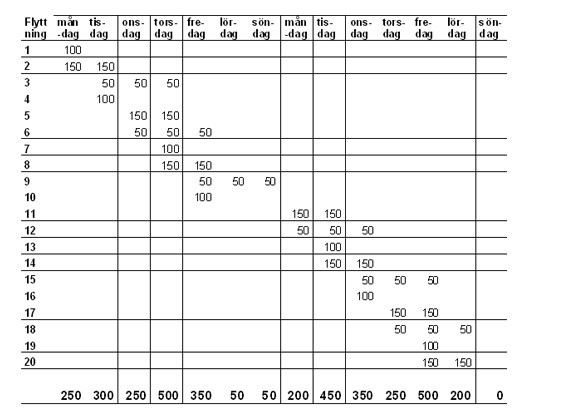
You can see the total excise duty amounts for each day’s ongoing excise movements at the bottom of the table in Example 2 above. The total of these amounts is SEK 3,700,000. The average daily excise duty amount for movement under duty suspension is therefore SEK 284,615 (SEK 3,700,000 divided by 13 days).
The Swedish Tax Agency may decide that you do not have to provide a movement guarantee for sea freight deliveries on Swedish territory. This is known as an excise duty adjustment.
Apply for an excise duty adjustment by filling in and submitting form SKV 5427 (“Begäran Jämkning av säkerhet – Skatt på energi”), which is in Swedish. Our postal address is on the form. State clearly your reasons for applying for an excise duty adjustment.
Different ways to provide a movement guarantee
You can choose to provide the movement guarantee in the form of a pledged account, or a demand guarantee. Here are some examples of movement guarantees:
- Example: pledging a frozen account as an authorised warehouse keeper’s movement guarantee for excise duty on fuel
- Example: bank guarantee as an authorised warehouse keeper’s movement guarantee cover for excise duty on fuel (in Swedish)
- Example: using a pledge account as an authorised warehouse keeper's payment guarantee for excise duty on fuel (in Swedish)
- Example: bank guarantee as an authorised warehouse keeper’s guarantee for payment excise duty on fuel
Withdrawal of authorised warehouse keeper status
Your approval can be withdrawn for any of the following reasons:
- If you completely or partially cease to carry out your business activities involving duty-suspended fuel, you must request the withdrawal of your approval as an authorised warehouse keeper. To do this, fill in and submit the excise duty deregistration form SKV 5335 (“Avregistrering – punktskatt”) to the Swedish Tax Agency. Our postal address is on the form. An authorised signatory must sign the form.
- The Swedish Tax Agency can withdraw your approval as an authorised warehouse keeper if you do not fulfil your responsibilities with regard to excise duty returns, excise duty payments, or business accounting records, in the event of economic crime, or if you have not reported changes in your business activities on an ongoing basis. The business’s signatories, accountant or board of directors might have changed, for example. The payment guarantee that you have provided might also be insufficient.
If your approval is withdrawn, you are not entitled to dispatch fuel under a duty-suspension arrangement. This means that your excise warehouse approval and registered consignor approval will also be withdrawn. You must report excise duty on all duty-suspended fuels being kept in a warehouse when your approval is withdrawn.
Various excise duty returns for authorised warehouse keepers
As an authorised warehouse keeper, you may need to file three different types of excise duty returns, depending on the fuels for which you have been granted approval:
- Excise duty return 712: Use this excise duty return to report excise duty on energy and carbon dioxide for fuels such as gas oil, liquefied gas oil, liquefied biogas, aviation kerosene, heavy fuel oil and vegetable and animal oils.
- Excise duty return 714: Use this excise duty return to report excise duty on energy and carbon dioxide, primarily for petrol, alkylate petrol and E85.
- Excise duty return 718: Use this excise duty return to report excise duty on sulphur, primarily for heavy fuel oil.
As an authorised warehouse keeper, you must pay excise duty on energy, carbon dioxide and sulphur (if applicable) for:
- Fuel dispatched from your excise warehouse without being under a duty suspension arrangement. As long as the fuel remains in the excise warehouse, you do not need to pay excise duty on it. You only need to pay the excise duty when the fuel actually leaves the excise warehouse, or when someone (you or another person) has used the fuel inside your excise warehouse. Examples of use include fuel consumption in industrial operations, or for heating a storage cistern.
- Fuel you receive at a pre-registered direct delivery location, if the fuel is not transferred directly to an excise warehouse in Sweden.
- Fuel you receive at a location closely connected with your excise warehouse, if the fuel is not brought directly into the excise warehouse that the consignor has registered in an electronic administrative document (eAD). One example is when you receive fuel at a loading dock. You must also have accepted receipt of the fuel by creating an electronic Report of Receipt document in the EU-wide Excise Movement and Control System (EMCS).
- Missing inventory owing to theft or waste, for example. As a warehouse keeper, you cannot be granted an exemption from excise duty on fuel that has left the excise warehouse due to criminal activities.
- Fuel being stored, if approval of your excise warehouse is withdrawn.
In certain circumstances, you can claim a deduction in your excise duty return. Information about the business operations and areas of use to which this applies, is available on our webpage “Excise duty on energy”.
If you have delivered fuel in Sweden for US armed forces, you can claim a deduction if you have a certificate which states that the goods will be used by or for the armed force in question. The invoice must also state that you have delivered the fuel on a duty-exempt basis. You can also claim a deduction for fuel consumed in supplying other goods and services to US armed forces.
Registered consignor
A registered consignor is a party authorised by the Swedish Tax Agency to dispatch certain fuels from a place of import under a duty-suspension arrangement. As a registered consignor, you are entitled to defer payment of excise duty on energy, carbon dioxide and sulphur (if applicable) when you dispatch fuels under a duty-suspension arrangement from a place of import. Petrol, gas oil and liquefied petroleum gas are examples of fuels subject to duty-suspension arrangements.
To be granted registered consignor status, you must meet our approval requirements with regard to your financial situation and other circumstances.
How to apply for registered consignor status
Fill and submit form (SKV 5334). Our address is on the form.
We will contact you if we need any additional information, such as details of your business’s financial position.
You can defer payment of excise duty
As a registered consignor, you are liable for the excise duty on fuel until it reaches a specific destination. Your liability is then deferred, and transferred to the consignee, when you move the fuel from a place of import to:
- a registered consignee in another EU country
- a temporarily registered consignee in another EU country
- a preregistered direct delivery location in Sweden or another EU country
- a place of export: i.e., a place from which goods leave the EU
- an excise warehouse in Sweden or another EU country
- a customs office of exit that is also the customs office of departure for the external transit procedure.
If fuel is due to be exported directly after import, as a registered consignor you are liable for the excise duty on the fuel until it has actually left the EU.
Transit movement of fuel to an embassy, consulate-general or international organisation
You can also defer payment of excise duty on fuel if you move fuel to an embassy, consulate-general or international organisation in an EU country – provided that excise duty exemption also applies in the EU country in question.
Only the following places and people are permitted to receive the fuel:
- an embassy or consulate in another EU country
- a member of the diplomatic staff at an embassy or consulate
- an international organisation based in another EU country
- a representative of an EU country within an international organisation
- a person with a position or an assignment within an international organisation.
Moving fuel for receipt by armed forces
You can also defer payment of excise duty on fuel if you move the fuel for receipt by armed forces in another EU country.
The following requirements must be fulfilled, provided that excise duty exemption also applies in the EU country to which the fuel will be moved:
- The armed forces belong to a country other than the country to which the fuel will be moved.
- The armed forces are participating in defence operations within the framework of the common security and defence policy, or belong to the parties to the North Atlantic Treaty.
- The fuel will be used by forces personnel, civilian staff accompanying the forces, or the forces’ catering services or retail stores.
Moving fuel within the EU
As a registered consignor, when you move fuel under excise duty suspension from a place of import, this transit movement of goods must be recorded in an electronic administrative document (eAD). You create this eAD using the EU-wide Excise Movement and Control System (EMCS).
Excise numbers and the System for the Exchange of Excise Data (SEED) register
When you are granted registered consignor status, the Swedish Tax Agency will give you an excise number. Before dispatching fuel, a registered consignor needs to know the consignee’s excise number in order to check whether the fuel can be moved under duty suspension. An excise number is required to create an eAD in the EMCS, and is also used for identification in the SEED register, which includes details of all approved EU actors.
The SEED register provides authorisation details and other information required by businesses and government agencies to enable movement of excise duty liable fuels under duty suspension. Information from the SEED register is also shared to the EMCS. This enables you, as a consignor, to check the validity of the consignee’s excise number.
Providing a movement guarantee
If you move fuel under excise duty suspension, you must provide a movement guarantee corresponding to the total amount of excise duty applicable to the fuel. The Swedish Tax Agency can claim the movement guarantee amount if you become liable to pay excise duty in connection with a consignment, or if you do not pay the excise duty on time.
The movement guarantee is valid in all EU countries. This means that the Swedish Tax Agency can use it for the payment of excise duty if you become liable to pay excise duty in another EU country on fuel that you have dispatched from Sweden under duty suspension. Your movement guarantee must be registered with the Swedish Tax Agency prior to dispatch.
How do I calculate the movement guarantee amount?
In order to calculate the right amount of guarantee cover, you must work out a daily average for excise duty on fuel consignments that you move under duty suspension. Include only the days during which you move fuel over a one-year period.
You must include administrative excise movements between a place of import and an excise warehouse located within the same storage space. An administrative excise movement takes place through an update to the stock records. The goods themselves are not moved physically.
Movement guarantee calculation: examples
Example 1
Movement | Number of days on which goods were moved | Excise duty amount per movement | Excise duty amount × number of days |
|---|---|---|---|
1 | 2 | SEK 21,580 | SEK 43,160 |
2 | 1 | SEK 83,000 | SEK 83,000 |
3 | 3 | SEK 20,056 | SEK 60,168 |
4 | 1 | SEK 56,000 | SEK 56,000 |
5 | 4 | SEK 95,268 | SEK 381,072 |
Total | 11 | SEK 623,400 |
Here’s how to calculate the movement guarantee amount:
SEK 623,400 divided by 11 days = SEK 56,673
Example 2
You move fuel consignments under duty suspension on 20 different occasions over a two-week period. You start to move two consignments a day on each business day (Monday to Friday). Ongoing movements continue during weekends, but no new movements are started.
Each movement takes one to three days to complete and is subject to excise duty amounting to SEK 50,00, SEK 100,000 or SEK 150,000. No movement is undertaken on the last Sunday of the period in question. Movements therefore take place on 13 days during a two-week period.
You can see the total excise duty amounts for each day’s ongoing excise movements at the bottom of the table in Example 2 above. The total of these amounts is SEK 3,700,000.
The average daily excise duty amount for movement under duty suspension is therefore SEK 284,615 (SEK 3,700,000 divided by 13 days).
The Swedish Tax Agency may decide that you do not have to provide a movement guarantee for sea freight deliveries on Swedish territory. This is known as an excise duty adjustment.
Apply for an excise duty adjustment by filling in and submitting Form SKV 5427 (“Begäran Jämkning av säkerhet – Skatt på energi”), which is in Swedish. Our postal address is on the form. State clearly your reasons for applying for an excise duty adjustment.
Different ways to provide a movement guarantee
You can choose to provide the movement guarantee in the form of a pledged account or a demand guarantee. You must enter into an agreement with your bank if you wish to provide a demand guarantee.
Here are some examples of movement guarantees:
- Example: pledging a frozen account as a registered consignor’s movement guarantee for excise duty on fuel (in Swedish)
- Example: a demand guarantee provided as a registered consignor’s movement guarantee for excise duty on fuel (in Swedish)
Withdrawal of registered consignor approval
Your approval can be withdrawn for any of the following reasons:
- If you completely or partially cease to carry out your business activities involving duty-suspended fuel, you must request the withdrawal of your approval as a registered consignor. To do this, fill in and submit the excise duty deregistration form SKV 5335 (“Avregistrering – punktskatt”) to the Swedish Tax Agency. Our postal address is on the form. An authorised signatory must sign the form.
- The Swedish Tax Agency can withdraw your registered consignor approval if you do not fulfil your responsibilities with regard to excise duty returns, excise duty payments or business accounting records; in the event of economic crime; or if you have not reported changes in your business activities on an ongoing basis. The business’s signatories, accountant or board of directors might have changed, for example. The payment guarantee that you have provided might also be insufficient.
If your approval is withdrawn, you are not entitled to dispatch fuel under a duty-suspension arrangement.
Various excise duty returns for registered consignors
As a registered consignor, you may need to file three different types of excise duty returns, depending on the fuels for which you have been granted approval:
- Excise duty return 712: Use this excise duty return to report excise duty on energy and carbon dioxide for fuels such as gas oil, liquefied gas oil, liquefied biogas, aviation kerosene, heavy fuel oil and vegetable and animal oils.
- Excise duty return 714: Use this excise duty return to report excise duty on energy and carbon dioxide, primarily for petrol, alkylate petrol and E85.
- Excise duty return 718: Use this excise duty return to report excise duty on sulphur, primarily for heavy fuel oil.
Registered consignee
A registered consignee is a party authorised by the Swedish Tax Agency to take delivery on a professional basis of fuel moved from another EU country under duty suspension. If you have been granted registered consignee status, you are entitled to defer payment of excise duty on energy, carbon dioxide and sulphur (if applicable) on duty-suspended fuel until you have taken delivery of it in Sweden. Petrol, gas oil and liquefied petroleum gas are examples of duty-suspended fuels.
To be granted registered consignee status, you must meet our approval requirements with regard to your financial situation and other circumstances.
How to apply to become a registered consignee
Fill in and submit form SKV 5347. Our address is on the form.
We will contact you if you need to supplement your application, such as with information about your company’s financial position.
Normal delivery address and direct-delivery locations
As a registered consignee, you must specify an address in Sweden at which you will take delivery of fuel moved under duty suspension from another EU country. This address is known as your normal delivery address.
You can only specify one normal delivery address. If you want to change your normal delivery address, you can fill in and submit form SKV 5430.
If you want to take delivery of fuel under duty suspension in other places, you must register these places as direct-delivery locations. You do this by filling in and submitting form SKV 5369.
Excise number, SEED register and EMCS
When you are granted registered consignee status, the Swedish Tax Agency will give you an excise number. The excise number is used for identification in the SEED register, which includes details of all approved EU actors. The SEED register provides authorisation details and other information required by businesses and government agencies to enable movement of fuels under duty suspension. Data from the SEED register is also supplied to the Excise Movement and Control System (EMCS).
The sender creates an electronic administrative document (eAD) in EMCS before the fuel is dispatched to you. When you have taken delivery of the fuel at your normal delivery address or a direct-delivery location, you must create a Report of Receipt in EMCS within five days.
Providing a payment guarantee
If you have been granted registered consignee status, you must provide an excise duty payment guarantee for fuel that you receive from other EU countries under a duty suspension arrangement. The Swedish Tax Agency can claim this guarantee amount if you do not pay the excise duty for which you are liable on time.
You must send the original payment guarantee document to the Swedish Tax Agency at this address:
Skatteverket
771 83 Ludvika
If the payment guarantee amount that you have provided is insufficient, the Swedish Tax Agency can withdraw your registered consignee approval.
Here's how to calculate the average excise duty amount
Calculate the total amount of excise duty for your latest reporting periods (up to a maximum of 12), as outlined above. Then divide this amount by the number of reporting periods for which you have paid excise duty.
Example 1
Reporting period | Excise duty payable |
|---|---|
April - Year 1 | SEK 30,000 |
May - Year 1 | SEK 25,000 |
June - Year 1 | SEK 0 |
July - Year 1 | SEK 20,000 |
August - Year 1 | SEK 25,000 |
September - Year 1 | SEK 30,000 |
October - Year 1 | SEK 0 |
November - Year 1 | SEK 45,000 |
December - Year 1 | SEK 25,000 |
January - Year 2 | SEK 0 |
February - Year 2 | SEK 15,000 |
March - Year 2 | SEK 20,000 |
Total excise duty payable | SEK 235,000 |
Here's how you calculate the payment guarantee amount:
SEK 235,000 ÷ 9 (the number of reporting periods for which you have paid excise duty) = SEK 26,111.
You must therefore provide a minimum payment guarantee of SEK 26,111.
Example 2
You were granted registered consignee status in May
Reporting period | Excise duty payable |
|---|---|
May | SEK 15 000 |
June | SEK 0 |
July | SEK 20,000 |
August | SEK 15,000 |
September | SEK 25,000 |
October | SEK 0 |
November | SEK 30,000 |
Total excise duty payable | SEK 105,000 |
You calculate the payment guarantee amount as follows:
SEK 105,000 ÷ 5 (the number of reporting periods for which you have paid excise duty) = SEK 21,000.
You must therefore provide a minimum payment guarantee of SEK 21,000.
If the payment guarantee amount you have calculated is SEK 0, you must provide a payment guarantee equivalent to the full amount of excise duty on the fuels being moved for you to receive (see example 3 below).
Example 3
The Swedish Tax Agency has determined that you are liable to pay SEK 0 in excise duty for the past 12 months. On 15 August, fuel is dispatched to you from another EU country under duty suspension. The excise duty on this fuel amounts to SEK 30,000. You must therefore provide a payment guarantee of at least SEK 30,000, which must be registered by the Swedish Tax Agency on 15 August at the latest.
Adjustment of collateral amount
The Swedish Tax Agency may decide to grant you a payment guarantee adjustment (either by reducing it or by removing the requirement completely) if there are grounds for this, taking into account your financial situation or other special circumstances. If you request a payment guarantee adjustment, you must state clearly the reasons for this. You apply for a payment guarantee adjustment by filling in and submitting form SKV 5427 below. Our address is on the form.
Various ways to provide a payment guarantee
You can choose to provide the payment guarantee in the form of a pledged account, or a demand guarantee. If you wish to provide a demand guarantee, you must enter into an agreement with your bank. Here are some examples of payment guarantees:
- Providing a registered consignee’s excise duty payment guarantee in the form of a pledged account (in Swedish)
- Providing a registered consignee’s excise duty payment guarantee in the form of a demand guarantee (in Swedish)
Withdrawal of registered consignee approval
Your registered consignee approval can be withdrawn for any of the following reasons:
- If you completely or partially cease to carry out your business activities involving duty-suspended fuel, you must request the withdrawal of your approval as a registered consignee. To do this, fill in and submit the excise duty deregistration form SKV 5335 (“Avregistrering – punktskatt”) to the Swedish Tax Agency. Our postal address is on the form. An authorised signatory must sign the form.
- The Swedish Tax Agency can withdraw your registered consignee approval if, for example, you do not fulfil your responsibilities with regard to excise duty returns, excise duty payments or business accounting records; in the event of economic crime; or if you have not reported changes in your business activities on an ongoing basis. The business’s signatories, accountant or board of directors might change, for example. The payment guarantee amount that you have provided might also be insufficient. If your approval is withdrawn, you will not be entitled to receive fuel under duty suspension.
Various excise duty returns for registered consignees
As a registered consignee, you may need to file three different types of excise duty returns, depending on the fuels for which you have been granted approval:
- Excise duty return 712: Use this excise duty return to report excise duty on energy and carbon dioxide for fuels such as gas oil, liquefied gas oil, liquefied biogas, aviation kerosene, heavy fuel oil and vegetable and animal oils.
- Excise duty return 714: Use this excise duty return to report excise duty on energy and carbon dioxide, primarily for petrol, alkylate petrol and E85.
- Excise duty return 718: Use this excise duty return to report excise duty on sulphur, primarily for heavy fuel oil.
As a registered consignee, you must pay excise duty on all duty-liable fuels under duty suspension that you receive in Sweden. When you take receipt of the fuel, you must pay excise duty on it.
Under certain circumstances, you can claim a deduction in your excise duty return. Information about the business operations and areas of use to which this applies, is available on our webpage “Excise duty on energy”.
Temporarily registered consignee
A temporarily registered consignee is a party authorised by the Swedish Tax Agency to take delivery on a one-off professional basis of a specific consignment of fuel moved from another EU country under duty suspension. If you have been granted temporarily registered consignee status, you are entitled to defer payment of excise duty on energy, carbon dioxide and sulphur (if applicable) on duty-suspended fuel until you have taken delivery of it in Sweden. Petrol, gas oil and liquefied petroleum gas are examples of duty-suspended fuels.
- Fuels subject to a duty suspension arrangement (in Swedish)
- Temporarily registered consignee (Legal guidance, in Swedish) External link.
How to apply for temporarily registered consignee status
1. Fill in and submit form SKV 5371, “Application/Notification: Temporarily registered consignee – Excise duty on alcohol goods, tobacco goods, energy”. Our address is on the form.
2. In order to handle fuel under duty suspension, you must provide a payment guarantee for the amount of excise duty that you may have to pay.
You provide a payment guarantee by making an advance payment to the Swedish Tax Agency’s Bankgiro account: 5583-8411. This payment guarantee must be equivalent to the amount of excise duty payable on the fuel that will be delivered to you. State your name and corporate identity number when you make your payment so that we can link your payment guarantee to your application/notification. Please contact the Swedish Tax Agency if you would like to provide a payment guarantee in the form of a demand guarantee or pledged account instead. You do not need to provide a payment guarantee for fuel that is not subject to excise duty, or that is exempt from excise duty. This applies to fuel delivered to you in containers of up to one litre.
We will contact you if we need you to provide additional information to complement your application.
3. You will be given a temporary excise number when the Swedish Tax Agency has approved your application for temporarily registered consignee status.
Excise number, SEED register and EMCS
When you are granted temporarily registered consignee status, the Swedish Tax Agency will give you a temporary excise number. This excise number is used for identification in the SEED register, which includes details of all approved EU actors. The SEED register provides authorisation details and other information required by businesses and government agencies to enable movement of fuels under duty suspension. Data from the SEED register is also supplied to the Excise Movement and Control System (EMCS)
The sender creates an electronic administrative document (eAD) in EMCS when the fuel is dispatched to you. When you have taken delivery of the fuel at your delivery address, you must create a Report of Receipt in EMCS within five days.
How to file an excise duty return as a temporarily registered consignee
You must file an excise duty return for the fuel no later than five days after you take delivery of it. You must not file an excise duty return for fuel that is not subject to excise duty, or that is exempt from excise duty. This applies to fuel delivered to you in containers of up to of one litre.
Filing excise duty returns digitally for oil or liquefied petroleum gas
If you are required to file an excise tax return for oil or liquefied petroleum gas, you can do so by logging in to our e-service. Here you select the option “Create a special excise duty return” (“Skapa en särskild skattedeklaration)”.
File an excise tax return on paper for petrol or sulphur
If you are required to file an excise tax return for petrol or sulphur, you must use a paper form. You download it yourself.
- Special excise duty return: petrol (SKV 5407, in Swedish)
- Special excise duty return: sulphur (SKV 5405, in Swedish)
This is good to know when you file an excise tax return on paper
In the “Period” box, you must enter the date on which you took receipt of the fuel. Your paper excise duty return must be signed by an authorised signatory and sent to the postal address stated on it.
Excise duty return filing deadline
The Swedish Tax Agency must receive your excise duty return no later than five days after you have taken delivery of the fuel in Sweden.
Deductions
Under certain circumstances, you can claim a deduction in your excise duty return. Information about eligible business activities and areas of use is available on our webpage “Excise duty on energy”.
Paying excise duty
The fuel duty will be deducted from the payment guarantee amount you provided. The amount in question will be credited to your tax account when the Swedish Tax Agency has processed your excise duty return. If the payment guarantee you provided covers the excise duty payable on the consignment, you will not need to make any further payment.
However, if the fuel duty amount exceeds the payment guarantee provided, you must pay the difference into your tax account no later than five days after taking delivery of the fuel. If the duty payable amounts to less than the payment guarantee provided, the Swedish Tax Agency will contact you.
Stockist
A stockist is a party approved by the Swedish Tax Agency to handle certain fuels on which excise duty has not yet become chargeable. Such fuels include crude tall oil, gaseous liquefied petroleum gas, gaseous biogas, gaseous biopropane, natural gas, coal, coke and peat. In order to handle fuels on which excise duty has not yet become chargeable, you must own them.
You can be granted approved stockist status if you do one of the following:
- extract fuel
- manufacture fuel
- process fuel
- store fuel on a significant scale
- resell gaseous hydrocarbons on a significant scale.
Conducting any of the activities listed above – or having the intention to do so – qualifies you for approved stockist status. When you have been granted approved stockist status, you are also entitled to handle fuel on which excise duty has not yet become chargeable, in accordance with all of the other points listed above.
You can find out what “on a significant scale” means here:
- The nature of the business (Legal guidance, in Swedish) External link.
- Stockist (Legal guidance, in Swedish) External link.
When must I pay excise duty?
You pay excise duty when you:
- have delivered fuel to a buyer that is not a stockist
- have delivered fuel to your own retail outlet which is not a depot
- have used fuel for a purpose other than selling it – for example, when you have consumed fuel yourself
- cease to be an approved stockist.
You do not need to pay excise duty when you deliver fuel to another approved stockist. The same applies when you move fuel between your own warehouses in Sweden. Every time you deliver a fuel consignment, you must check that the buyer is an approved stockist. Your bookkeeping records must include details of deliveries of fuels on which excise duty has not yet become chargeable.
When you dispatch fuel from Sweden to another EU country, or export it to a non-EU country, you can claim a deduction in your excise duty return.
If you import fuel that you own to Sweden from a non-EU country, you do not need to pay import duty to the Swedish Customs Service. You declare the import duty in your excise duty return – for example, when you sell the fuel to a party that is not a stockist. However, if you do not own the fuel, you must pay import duty on it to the Swedish Customs Service.
How to apply for approved stockist status
To be granted approved stockist status, you must meet our approval requirements with regard to your financial situation and other circumstances.
1. Fill in and submit form SKV 5075, “Application: Stockist approval – Excise duty on energy”. Our address is on the form.
2. We will contact you if we need any additional information, such as details of your business’s financial position.
Withdrawal of approved stockist status
Your approved stockist status can be withdrawn for any of the following reasons:
- If you completely or partially cease to carry out business activities involving fuel, you must request the withdrawal of your approved stockist status. To do this, fill in and submit the excise duty deregistration form SKV 5335 (“Avregistrering – punktskatt”) to the Swedish Tax Agency. Our postal address is on the form. An authorised signatory must sign the form.
- The Swedish Tax Agency can withdraw your approved stockist status if, for example, you do not fulfil your responsibilities with regard to excise duty returns, excise duty payments or business bookkeeping records; in the event of economic crime; or if you have not reported changes in your business activities on an ongoing basis. The business’s signatories, accountant or board of directors might change, for example.
If your stockist approval is withdrawn, you are not entitled to take delivery of, dispatch or store fuel on which excise duty has not yet become chargeable. This also means that you must report duty on any fuel in your stock on which excise duty has not yet been paid.
Various excise duty returns for approved stockists
As an approved stockist, you may need to file three different types of excise duty returns, depending on the fuels you handle:
- Excise duty return 713: Use this excise duty return to report excise duty on energy and carbon dioxide, primarily for natural gas, gaseous biogas, gaseous liquefied petroleum gas, coal, coke, petroleum coke (petcoke), dimethyl ether (DME), methane and waste oils.
- Excise duty return 718: Use this excise duty return to report excise duty on sulphur, primarily for coal, coke and peat.
- Excise duty return 736: Use this excise duty return to report excise duty on energy for crude tall oil.
Under certain circumstances, you can claim a deduction in your excise duty return. Information about the business activities and areas of use to which this applies is available on our webpage “Excise duty on energy”.
If you have delivered fuel in Sweden for US armed forces, you can claim a deduction if you have an invoice certifying that the goods will be used by or for the armed forces in question. The invoice must also state that you have delivered the fuel on a duty-exempt basis. You can also claim a deduction for fuel consumed in supplying other goods and services to armed forces.
An excise duty exempt user is approved by the Swedish Tax Agency to receive certain fuels on a duty-exempt basis from other parties, such as warehouse keepers or stockists in Sweden. As an excise duty exempt user, you are only permitted to receive and use fuel on a duty-exempt basis for the purpose for which you have been granted approval. You are not permitted to resell the fuel.
Exceptions apply to the following government agencies, which are permitted to resell aviation and marine fuel in certain circumstances:
- the Swedish Armed Forces (Försvarsmakten)
- the Swedish Coast Guard (Kustbevakningen)
- the Swedish Defence Materiel Administration (Försvarets materielverk)
- the Swedish Maritime Administration (Sjöfartsverket)
- the Swedish Police Authority (Polismyndigheten)
- the Swedish Transport Administration (Trafikverket).
You can be approved as a excise duty exempt user for the consumption of fuel:
- in ships that are not used for private purposes
- in certain boats that are not used for private purposes
- in aircraft that are not used for private purposes
- in aircraft engines in test beds or similar environments
- in trains or other rail vehicles
- for purposes other than engine operation or heating
- in a single process in which the fuel is used both for heating and for a purpose other than engine operation or heating
- in metallurgical processing
- in certain processes for the production of mineral products other than metals
- in soda or black liquor recovery boilers.
Here you can find further information about each area of use
- Consumption of fuel in certain boats and ships (vessels) for non-private use
- Aircraft and aircraft engines in testbeds or similar facilities
- Trains or other rail vehicles
- Consumption of fuel for a purpose other than engine operation or heating, or for dual use
- Metallurgical processing
- Mineralogical processing
- Consumption of fuel in soda or black liquor recovery boilers
- Excise duty exempt users – fuel (Legal guidance, in Swedish) External link.
How do I apply for approval as an excise duty exempt user?
If you wish to be granted approval as an excise duty exempt user, you must apply to the Swedish Tax Agency. You must meet our approval requirements with regard to your financial situation and other circumstances. Here’s what to do:
- Apply to the Swedish Tax Agency for approval, using form SKV 5079, which is available on our website. The Swedish Tax Agency’s address is stated on the form.
- Include the information and documents requested in the application form, such as a description of business activities, an annual financial statement and the CN code for the fuels for which you wish to be approved. CN codes are used to classify fuels and other goods under the EU Common Customs Tariff. Contact your fuel supplier if you are unsure which CN code applies to the fuel you intend to use.
- When you have submitted your application, the Swedish Tax Agency will conduct a suitability assessment of the legal entities and individuals specified in the application. We will do this by reviewing information registered by the Swedish Police Authority, the Swedish Enforcement Authority (“Kronofogden”) and the Swedish Companies Registration Office (“Bolagsverket”), and details stored in the Swedish Tax Agency's registers (such as tax account records). You will receive a decision notice by post.
If you are granted approval as an excise duty exempt user
If the Swedish Tax Agency approves your application, we will send you a decision notice including the following details:
- The date from which you are approved (approval is normally granted on an ongoing basis, but if a time limit applies, the approval period will be specified in the decision notice).
- The purpose or purposes for which we have granted you approval, and whether this is subject to any specific terms and conditions.
If you are granted approval as an excise duty exempt user, you must:
- report significant changes in ownership, and any changes regarding authorised signatories, auditors or board members to the Swedish Tax Agency on an ongoing basis
- notify the Swedish Tax Agency of any other changes to the details you have provided.
You cannot transfer your excise duty exempt user status to another party. If ownership of your business is transferred to another legal entity or individual, the new owner must apply for approval as an excise duty exempt user. Your approval can be withdrawn on the Swedish Tax Agency’s initiative or at your own request. If you change your business activities or sell your business, you must notify the Swedish Tax Agency immediately. You can notify us by email, or write to us at: Skatteverket, 771 83 Ludvika. Approval can be withdrawn if your business is subject to an acquisition or merger.
Stock records for excise duty exempt users
As an excise duty exempt user, you must maintain special stock records in which you document your purchase and use of duty-exempt fuel. You must update these records on a continuous basis. These stock records must include the following details, for example: the quantity and type of fuel you have purchased, the name of the seller and the date of delivery. The quantity of fuel you have used and its purpose must also be specified. You must also conduct regular stocktaking of fuel that you have purchased on a duty-exempt basis.
As an excise duty exempt user, you must also have documentation showing that the fuel has been used for the purpose(s) for which you have been granted approval. For example, if you are granted approval as an excise duty exempt user for fuel consumed in vessels or aircraft, you must keep a logbook or similar records to prove that the fuel has been used for a duty-exempt purpose.
Withdrawal of approval as an excise duty exempt user
The Swedish Tax Agency can withdraw your approval if you do not fulfil your responsibilities with regard to excise duty returns, excise duty payments or stock records; in the event of economic crime; or if you have not reported changes in your business activities on an ongoing basis. This includes changes to the business’s signatories, accountant or board of directors, for example.
If you completely or partially cease to carry out the activities covered by your approval as an excise duty exempt user, you must request the withdrawal of your approval. To do this, fill in and submit the excise duty deregistration form SKV 5335 (“Avregistrering – punktskatt”) to the Swedish Tax Agency. Our postal address is on the form. An authorised signatory must sign the form.
Some business operators must pay excise duty when they have sold excise duty liable fuel to private individuals and public authorities among others in Sweden. This applies to fuel transported to Sweden from another EU country.
Distance seller
You can apply to the Swedish Tax Agency for registration as a distance seller if you intend to send certain fuels on a regular basis to customers in Sweden who do not carry out independent economic activities (such as private individuals). The fuel must be dispatched or transported directly to Sweden from another EU country, and the transport must be arranged by you, or by someone else on your behalf.
- Fuels subject to a duty suspension arrangements
- Distance sales to Sweden (Legal guidance, in Swedish) External link.
- Distance selling of excise goods (European Commission) External link.
To be registered as a distance seller, you must meet certain requirements. This means that you:
- do not have liabilities on your tax account exceeding SEK 2,000
- do not have debts to the Swedish State that have been passed over to the Swedish Enforcement Authority (“Kronofogden”) for recovery
- have provided a payment guarantee corresponding to the amount of excise duty payable on the fuel you intend to send.
If you are not registered as a distance seller, the recipient of the fuel in Sweden must notify the Swedish Tax Agency of the movement of fuel and pay the excise duty.
How to register as a distance seller of fuel
Follow these steps to apply for registration as a distance seller.
- Submit your application
Fill in the application form and send it to the Swedish Tax Agency. The address details are stated on the form.
- Provide an excise duty payment guarantee
You must provide a payment guarantee for excise duty on fuel when you submit your application. This guarantee can be in the form of a bank guarantee (also known as a demand guarantee) or a pledged frozen account.
- Example in Swedish: Distance seller’s payment guarantee in the form of a bank guarantee (demand guarantee)
- Example in Swedish: payment guarantee in the form of a pledged frozen account
Your payment guarantee must cover the excise duty payable on each consignment of fuel.
Send the original payment guarantee document to the Swedish Tax Agency at this address:
Skatteverket
871 87 Härnösand
Once you have provided the payment guarantee and fulfilled the other requirements, we will reach a decision on registration and send you a decision notice.
How to report and pay excise duty as a distance seller
There are specific rules for when you must report and pay excise duty as a distance seller.
After you have reported and paid excise duty on the fuel, you can apply for a refund of excise duty that you have paid in the country of dispatch.
Report the sale of fuel
As a distance seller, you must report your sales of fuel dispatched to customers in Sweden during each calendar week: i.e., from Monday to Sunday. Even if you have not delivered fuel to any customers during a particular week, you must still file an excise duty return stating that you have nothing to report.
Your excise duty return for a particular week must be filed no later than Friday of the following week.
You can file your excise duty return using our e-service. Alternatively, you can use the paper form that is sent to you by post. If you file your excise duty return on a paper form, it must be signed by an authorised signatory.
Make sure you pay your excise duty on time. The required payment must be credited to your tax account no later than Friday of the week following the calendar week to which the excise duty return applies.
Apply for a refund of excise duty on fuel from another EU country
If you have paid excise duty on fuel in the country of dispatch, you can apply for a refund. You must apply to the tax authority in that country.
Deregistration
If you no longer make distance sales to Sweden, you must a submit a written request to deregister as a distance seller. Your request must be signed by an authorised signatory.
Legal guidance
Our legal guidance section provides in-depth information about the requirements for distance seller.
Temporarily registered distance seller
You can apply to the Swedish Tax Agency for temporary registration as a distance seller if you intend to send certain fuels on an occasional basis to customers in Sweden who do not carry out independent economic activities (such as private individuals). The fuel must be dispatched or transported directly to Sweden from another EU country, and the transport must be arranged by you, or by someone else on your behalf. As a temporarily registered distance seller, you are only permitted to sell fuels that are subject to a duty-suspension arrangement, and on which excise duty has already been paid in another EU country. Petrol, gas oil and liquefied petroleum gas are examples of duty-suspended fuels.
- Fuels subject to a duty suspension arrangements
- Distance sales to Sweden on an occasional basis (Legal guidance, in Swedish) External link.
If you are not registered as a distance seller, the recipient of the fuel in Sweden must notify the Swedish Tax Agency of the movement of fuel and pay the excise duty.
Apply for temporary registration as a distance seller of fuel
Here’s how to register.
- Apply to the Swedish Tax Agency
Complete form SKV 5372 and send it to the Swedish Tax Agency. The address details are stated on the form. We must receive your application before the fuel is dispatched from the other EU country.
If you intend to send fuel to several customers on the same occasion, you must submit a separate application for each consignment.
- Provide an excise duty payment guarantee
You must provide a payment guarantee for excise duty on fuel when you submit your application. The amount must correspond to the excise duty payable on the fuel.
If you intend to send fuel to several customers on the same occasion, you must provide a separate payment guarantee for each customer.
Your payment guarantee must be paid to the Swedish Tax Agency before the fuel is dispatched from the other EU country.
Bank details for payment guarantees
Pay the guarantee amount to the Swedish Tax Agency’s Bankgiro account. Enter your personal identity number or corporate identity number as a reference.
Bankgiro
5583-811
Making a payment from outside Sweden
If you transfer the payment guarantee amount from a foreign bank account, please use the following international payment details:
IBAN number
SE94 1200 0000 0128 1011 1502
BIC/Swift
DABASESX
Bank
Danske Bank, Norrmalmstorg 1, Box 7523, SE-103 92 Stockholm
Payee
Skatteverket
SE-831 87 Östersund
Once you have provided the payment guarantee, we will process your application and send you a decision notice regarding registration.
Reporting and paying excise duty as a temporarily registered distance seller
Here’s how to report and pay excise duty as a temporarily registered distance seller.
- File an excise duty return for the fuel
When the customer has taken delivery of the fuel, you must report the transaction in an excise duty return. The Swedish Tax Agency must receive your excise duty return no later than five days after the customer takes delivery of the fuel in Sweden.
Filing excise duty returns digitally for mineral oils or liquefied petroleum gas
You can use our e-service to file an excise duty return for mineral oils or liquefied petroleum gas. Here you select the option “Skapa en särskild skattedeklaration” (“Create a special excise duty return”).
File an excise duty return on paper for petrol or sulphur
If you need to file an excise duty return for petrol or sulphur, you must use a paper form. You download the form below yourself.
- Special excise duty return: petrol (SKV 5407, in Swedish)
- Special excise duty return: sulphur (SKV 5405, in Swedish)
This is good to know when you file an excise duty return on paper
Your paper excise duty return must be signed by an authorised signatory and sent to the postal address stated on the form.
- Pay excise duty on energy, carbon dioxide and sulphur (if applicable)
The fuel duty will be deducted from the payment guarantee amount you provided. The amount in question will be credited to your tax account when the Swedish Tax Agency has processed your excise duty return. If the payment guarantee you provided covers the excise duty payable on the consignment, you do not need to make any further payment.
However, if the fuel duty amount exceeds the payment guarantee provided, you must pay the difference into your tax account no later than five days after the fuel is delivered. If the duty payable amounts to less than the payment guarantee provided, the Swedish Tax Agency will contact you.
- Apply for a refund
If you have paid excise duty on fuel in the country of dispatch, you can apply for a refund. You apply to the country of export’s tax authority.
Legal guidance
Our legal guidance section provides in-depth information about the requirements for temporarily registered distance sellers.
Excise duty must also be paid by a business operator when fuel is sent to Sweden in connection with a distance sale by a party who is not registered as a distance seller. If you take receipt of fuel through distance selling, you must contact the Swedish Tax Agency to check whether the seller is registered as a distance seller.
Receiving fuel in Sweden sent from another EU country
If you intend to take receipt in Sweden of excise duty liable fuel sent from another EU country, you must apply to the Swedish Tax Agency to be registered as a temporary certified consignee or certified consignee. Which consignee status you should apply for depends on whether you want the registration to be valid for one or more consignments.
Certified consignee
If you intend to take receipt in Sweden of duty-suspended fuel from another EU country on more than one occasion, you must apply to the Swedish Tax Agency to be registered as a certified consignee. Your registration will remain valid until further notice, which means you do not need to register again for future consignments. If you do not apply for registration as a certified consignee, you must apply to be registered as a temporarily certified consignee each time you intend to take receipt of such fuel.
To be eligible for registration as a certified consignee, you must:
- not have liabilities on your tax account exceeding SEK 2,000
- have no debts with the Swedish Enforcement Authority (“Kronofogden”)
- have provided the required excise duty payment guarantee
- provide an address in Sweden at which you will take receipt of the fuel
How to apply for registration as a certified consignee
Register with the Swedish Tax Agency
Fill in application form SKV 5480 (which is in Swedish) and send it to the Swedish Tax Agency. The address details are stated on the form.
Please note that you must enter the name of the party who will be authorised to log in to the e-service “Excise Movement and Control System” (EMCS).
Provide an excise duty payment guarantee
When you submit your application, you must provide a payment guarantee for excise duty on fuel in the form of a bank guarantee or pledge account. The minimum payment guarantee is the amount corresponding to the excise duty on each movement of fuel being dispatched to you.
How to calculate the payment guarantee required
(Amount of fuel × rate of excise duty on energy) + (amount of fuel × rate of excise duty on carbon dioxide) = payment guarantee you must provide
If fuel contains sulphur
If the fuel’s sulphur content is more than 0.05%, you must include excise duty on sulphur in the payment guarantee amount. If this is the case, you calculate the payment guarantee required as follows:
(Amount of fuel × rate of excise duty on energy) + (amount of fuel × rate of excise duty on carbon dioxide) + (amount of fuel × rate of excise duty on sulphur) = payment guarantee amount you must provide
Fuel additives
If the fuel in question is an additive that will be blended with petrol, the payment guarantee must be calculated based on the excise duty rate for petrol. If the fuel additive will be blended with diesel, the payment guarantee must be calculated based on the excise duty rate for diesel.
What you need to do as a certified consignee
Provide the consignor with your excise number and address
Each time you plan to receive fuel from another EU country, you must provide the consignor with your excise number and the address at which you will take receipt of the fuel. Your excise number is stated in the decision notice you receive from the Swedish Tax Agency on registration.
The consignor needs these details in order to create an electronic administrative document (eAD) in the e-service EMCS.
If you (or another party) have been authorised to use EMCS, you can log in and check whether the consignor has created an eAD.
Submit a Report of Receipt in EMCS
You must submit a Report of Receipt in EMCS each time you take receipt of fuel If you (or another party) have been authorised to use EMCS, you can log in and submit a Report of Receipt. You must submit this report no later than five days after you take receipt of the fuel.
Declare the fuel
You must file an excise duty return for the fuel no later than five days after you take receipt of it. Do not file an excise duty return for fuel that is not subject to excise duty, or that is exempt from excise duty. This applies to fuel delivered to you in containers of up to one litre, for example.
Filing excise duty returns digitally for mineral oils or liquefied petroleum gas
If you are required to file an excise tax return for oil or liquefied petroleum gas, you can do so by logging in to our e-service. Here you select the option “Skapa en särskild skattedeklaration” (“Create a special excise duty return”).
File an excise tax return on paper for petrol or sulphur
Excise duty returns for petrol and sulphur must be filed on paper. You must download the excise duty return (below) yourself.
- Special excise duty return: petrol (SKV 5407, in Swedish)
- Special excise duty return: sulphur (SKV 5405, in Swedish)
This is good to know when you file an excise tax return on paper
In the “Period” box, you must enter the date on which you took receipt of the fuel. You must also state the Administrative Reference Code (ARC) for the consignment. You can find the ARC in the Report of Receipt that you created in the EMCS e-service. Your paper excise duty return must be signed by an authorised signatory and sent to the postal address stated on it. The Swedish Tax Agency must receive your excise duty return no later than five days after you receive the fuel.
Pay excise duty on the fuel
If you are liable to pay excise duty on the fuel, the amount due must be paid into your tax account no later than five days after you receive the fuel.
You might be eligible for a refund
You might be able to claim a refund of excise duty on fuel paid in the country of export. You apply to the country of export’s tax authority for a refund.
Legal guidance
Our legal guidance section provides in-depth information about what is required of a certified consignee.
Temporary certified consignee
If you intend to take receipt in Sweden of excise duty liable fuel sent from another EU country on just one occasion, you must apply to the Swedish Tax Agency to be registered as a temporarily certified consignee. Your registration is only valid for the movement of fuel that you specify in your application. If you are already registered as a certified consignee, you do not need to apply.
How to register as a temporary certified consignee
Register with the Swedish Tax Agency
Fill in application form SKV 5479 (which is in Swedish) and send it to the Swedish Tax Agency.
Please note that you must enter the name of the person who will be authorised to log in to the e-service “Excise Movement and Control System” (EMCS).
Provide a fuel duty payment guarantee
You must provide a payment guarantee for excise duty on fuel when you submit your application. The amount must correspond to the excise duty payable on the fuel that you will receive. You do not need to provide a payment guarantee for fuel that is not subject to excise duty, or that is exempt from excise duty. This applies to fuel delivered to you in containers of up to of one litre, for example.
Pay the guarantee amount into the Swedish Tax Agency’s Bankgiro account: 5583-8411. Enter your personal identity number or corporate identity number as a reference.
Please contact the Swedish Tax Agency if you wish to provide a payment guarantee in the form of a bank guarantee or a pledged frozen account instead.
How to calculate the payment guarantee required
(Amount of fuel × rate of excise duty on energy) + (amount of fuel × rate of excise duty on carbon dioxide) = payment guarantee you must provide
If fuel contains sulphur
If the fuel’s sulphur content is more than 0.05%, you must include excise duty on sulphur in the payment guarantee amount. If the fuel’s sulphur content is more than 0.05% by weight, but less than 0.2%, you must round up the amount to 0.2% by weight.
If this is the case, you calculate the payment guarantee required as follows:
(Amount of fuel × rate of excise duty on energy) + (amount of fuel × rate of excise duty on carbon dioxide) + (amount of fuel × number of tenths of 1% by weight of sulphur × rate of excise duty on sulphur) = payment guarantee amount you must provide
Excise duty rates, duty-liable quantities, etc. (legal guidance in Swedish) External link.
Fuel additives
If the fuel in question is an additive that will be blended with petrol, the payment guarantee must be calculated based on the excise duty rate for petrol. If the fuel additive will be blended with diesel, the payment guarantee must be calculated based on the excise duty rate for diesel.
What you need to do as a temporarily certified consignee
Provide the consignor with your excise number and address
Inform the consignor of your excise number and the address at which you will take receipt of the fuel. Your excise number is stated in the decision notice you receive from the Swedish Tax Agency once we have registered you as a temporarily certified consignee.
The consignor needs these details in order to create an electronic administrative document (eAD) in the e-service EMCS. If you (or another party) have been authorised to use EMCS, you can log in and check whether the consignor has created an eAD.
Submit a report of receipt in EMCS
When you have taken receipt of the fuel, you must submit a report of receipt in EMCS.
If you (or another party) have been authorised to use EMCS, you can log in and submit a report of receipt. You must submit this report no later than five days after you take receipt of the fuel.
Declare the fuel
You must file an excise duty return for the fuel no later than five days after you take receipt of it. Do not file an excise duty return for fuel that is not subject to excise duty, or that is exempt from excise duty. This applies to fuel delivered to you in containers of up to of one litre, for example.
Filing excise duty returns digitally for mineral oils or liquefied petroleum gas
If you are required to file an excise tax return for mineral oils or liquefied petroleum gas, you can do so by logging in to our e-service. Here you select the option “Skapa en särskild skattedeklaration” (“Create a special excise duty return”).
Filing excise duty returns on paper for other fuels
If you need to file an excise duty return for fuels other than mineral oils or liquefied petroleum gas, you must send in a paper form. You download the form (below) yourself.
- Special excise duty return: petrol (SKV 5407, in Swedish)
- Special excise duty return: sulphur (SKV 5405, in Swedish)
This is good to know when you file an excise tax return on paper
In the “Period” box, you must enter the date on which you took receipt of the fuel. You must also state the Administrative Reference Code (ARC) for the consignment. You can find the ARC in the Report of Receipt that you created in the EMCS e-service.
Your paper excise duty return must be signed by an authorised signatory and sent to the postal address stated on it. The Swedish Tax Agency must receive your excise duty return no later than five days after you receive the fuel.
Pay excise duty on the fuel
The fuel duty will be debited from the payment security amount you have provided. The amount in question will be credited to your tax account when the Swedish Tax Agency has processed your excise duty return. If the payment guarantee you provided is sufficient to cover the excise duty payable on the consignment, you do not need to make any further payment.
However, if the fuel duty amount exceeds the payment guarantee provided, you must pay the difference into your tax account no later than five days after you take receipt of the fuel.
If the fuel duty amount is less than the payment security provided, the Swedish Tax Agency will contact you.
You might be eligible for a refund
You might be able to claim a refund of excise duty on fuel paid in the country of export. You apply to the country of export’s tax authority for a refund.
Legal guidance
Our legal guidance section provides in-depth information about what is required of a temporarily certified consignee.
Dispatching fuel from Sweden
You must apply to the Swedish Tax Agency to be registered as a certified consignor or temporary certified consignor if you intend to dispatch excise duty liable fuel from Sweden to another EU country under a duty suspension arrangement. The consignee status you should apply for depends on whether you want the registration to be valid for one or more consignments.
Certified consignor
If you intend to dispatch duty-paid fuel held under a suspension arrangement from Sweden to another EU country, you must first apply to the Swedish Tax Agency for registration as a certified consignor. Fuel may be regarded as duty-paid even if excise duty has not been paid on it in Sweden. Your registration will remain valid until further notice, which means you do not need to register again for future consignments.
How to register as a certified consignor
This is how to apply for certified consignor status, and how to comply with the regulations on dispatching fuel as a certified consignor.
Apply to the Swedish Tax Agency for registration
Fill in application form SKV 5480 (which is in Swedish) and send it to the Swedish Tax Agency. Please note that you must provide details of the person who will be authorised to log in to the “Excise Movement and Control System” (EMCS) e-service.
Ask for the consignee’s details
You must obtain the consignee’s excise number and address prior to each planned dispatch of fuel to another EU country. You need these details in order to create an electronic administrative document (eAD) in the EMCS e-service.
Check that the excise number is valid by consulting the System for the Exchange of Excise Data (SEED) database. The number must be linked to a “Certified consignee” or “Temporarily certified consignee”. You are not permitted to dispatch fuel to a consignee without an excise number.
Create an electronic administrative document in the EMCS e-service
You must create an electronic administrative document (eAD) in EMCS prior to each planned dispatch of fuel to a consignee in another EU country. If you (or another party) have been authorised to use EMCS, you can log in and create an eAD. You must do this before dispatching the fuel.
When you have created an eAD, the system will send you a receipt with a unique Administrative Reference Code (ARC) for the movement in question.
Provide the ARC to the transporter
The party transporting the fuel must be able to show the ARC you received when you created the eAD. The transporter must be able to present the ARC at checks carried out at any point during the entire transport – i.e. between the dispatch address and the consignee’s delivery address.
Check that the consignee has created a “Report of Receipt” in EMCS
The consignee must acknowledge receipt of the fuel through EMCS. If you (or another party) have been authorised to use EMCS, you can log in to check whether the consignee has created a “Report of Receipt”. This report is required if you wish to claim a refund of excise duty paid in Sweden.
You might be eligible for a refund
You might be able to claim a refund of excise duty paid in Sweden on fuel that you have sent to other EU countries. To qualify for a refund, you must have followed the procedures outlined above. There must be a Report of Receipt in EMCS, or other documentation accepted by the relevant government agency in the Member State of Destination, showing that the fuel has reached the consignee. You must also be able to show that excise duty has already been paid on the fuel in Sweden.
Your refund application must be signed by an authorised signatory or a representative with power of attorney. You can scan and email the signed application form or send it to us by post.
Email address
Address
The Swedish Tax Agency
871 87 Härnösand
Legal guidance
Our legal guidance section provides in-depth information about the requirements for certified consignors.
Temporarily certified consignor
If you intend to dispatch duty-paid fuel held under a suspension arrangement from Sweden to another EU country on a single occasion, you must first apply to the Swedish Tax Agency for registration as a temporarily certified consignor. Your registration is only valid for the movement of fuel that you state in your application.
Fuel may be regarded as duty-paid even if excise duty has not been paid on it in Sweden.
How to register as a temporarily certified consignor
Ask for the consignee’s details
To complete your application, you must obtain the excise number and address of the consignee in the other EU country. You also need to obtain the address at which the consignee will take receipt of the fuel.
Check the excise number
Check that the excise number is valid by consulting the System for the Exchange of Excise Data (SEED) database. The number must be linked to a “Certified consignee” or “Temporarily certified consignee”. You are not permitted to dispatch fuel to a consignee without an excise number.
Apply to the Swedish Tax Agency for registration
Fill in application form SKV 5481 (which is in Swedish), and send it to the Swedish Tax Agency. The address details are stated on the form.
Please note that you must state the name of the person who will be authorised to log in to the e-service Excise Movement and Control System (EMCS).
What you need to do as a temporarily certified consignor
Create an electronic administrative document in the EMCS e-service
You must create an electronic administrative document (eAD) in EMCS before you dispatch the fuel to the consignee in another EU country. If you (or another party) have been authorised to use EMCS, you can log in and create an eAD.
When you have created an eAD, EMCS will send you a receipt with a unique Administrative Reference Code (ARC) for the duty-suspended movement in question.
Provide the ARC to the transporter
The party transporting the fuel must be able to show the ARC you received when you created the eAD. The transporter must be able to present the ARC at checks carried out at any point during the entire transport – i.e. between the dispatch address and the consignee’s delivery address.
Check that the consignee has created a “Report of Receipt” in EMCS
The consignee must acknowledge receipt of the fuel through EMCS. If you (or another party) have been authorised to use EMCS, you can log in to check whether the consignee has created a “Report of Receipt”. This report is required if you wish to claim a refund of excise duty paid in Sweden.
You might be eligible for a refund
You might be able to claim a refund of excise duty paid in Sweden on fuel that you have sent to another EU country. To qualify for a refund, you must have followed the procedures outlined above. There must be a Report of Receipt in EMCS, or other documentation accepted by the relevant government agency in the Member State of Destination, showing that the fuel has reached the consignee. You must also be able to show that excise duty has already been paid on the fuel in Sweden.
Your refund application must be signed by an authorised signatory or a representative with power of attorney. You can scan and email the signed application form or send it to us by post.
Email address
Address
The Swedish Tax Agency
871 87 Härnösand
Legal guidance
Our legal guidance section provides in-depth information about the requirements for temporarily certified consignors.
Handling fuel if you are not an approved business operator
If you extract, manufacture or process excise duty liable fuel and you are not an approved business operator, you must declare and pay excise duty on energy, carbon dioxide and sulphur (if applicable) to the Swedish Tax Agency. You must make your payment to us directly, as soon as the fuel in question is extracted, manufactured or processed.
The same rules apply if you dispatch fuel to Sweden (or take receipt of it here) – other than fuels under a duty suspension arrangement – from another EU member state without being an approved stockist.
These rules also apply if you buy duty-free fuel or fuel at a reduced excise duty rate, and then use it for a purpose that does not qualify for an excise duty exemption.
You must download the excise duty return (below) yourself.
- Särskild skattedeklaration olja, gasol (SKV 5408)
- Särskild skattedeklaration bensin (SKV 5407)
- Särskild skattedeklaration – råtallolja (SKV 5421)
- Särskild skattedeklaration – naturgas, biogas, kol och koks m.m. (SKV 5423)
If you import fuel from a non-EU country, you pay excise duty to the Swedish Customs Service.
Exporting fuel from Sweden
Those who are exporting taxed fuel from Sweden to another EU country, may be entitled to a refund of the fuel tax paid in Sweden. To obtain a refund from the Swedish Tax Agency, you must be able to prove that the fuel tax was also paid in the other EU country, or that the fuel is intended for use in that country for a purpose that is tax exempt in that country. If your export the fuel to a non-EU country, export regulations shall apply.
If you are an authorised party, you may, under certain conditions, bring fuel to a country beyond Sweden without liability for taxes to the Swedish Tax Agency. Authorised warehouse keepers, registered consignors or stockists can read more here about the regulations applicable to the export of fuel from Sweden:
Government support measures
Certain deductions and refunds of excise duty on fuel are forms of government support.
Information about government grants
When deciding on deductions or refunds of fuel tax for certain scopes of use, the Swedish Tax Agency applies EU regulations on government grants. Obtaining a government grant is conditional on the recipient of the grant fulfilling the existing requirements. For example, the recipient of a grant must not be under economic difficulties.
If you have received a certain amount of government aid in the past calendar year, you are to submit statistical data to the Swedish Tax Agency. You can read more about government grants and when you are to submit information within the relevant scopes of use. In such a case, the information that you submit comprises:
- type of company (small, mid-size or large)
- region (the region in which the most of the fuel was used)
- field of activity – the three digits of the Swedish Standard Industrial Classification (SNI) code for the activities in which most of the fuel was used.
You can find for further information in the Legal guidance under the heading Obtaining statistical data.
Pursuant to EU regulations, the Swedish Tax Agency must, in its capacity as a provider of grants, publish information about Sweden’s recipients of grants that total a specific amount. This can be found at the European Commission website.
Paying excise duty on marked fuel and aviation kerosene
You must declare any fuel consumed for your own private use on a boat or ship. The same rule applies to aviation kerosene consumed for your own private use on board an aircraft.
Private use of a boat, ship or aircraft means all forms of use other than the following:
- transport of passengers or goods for compensation or provision of other services for compensation
- use by public authorities, or use on behalf of public authorities
- use by voluntary defence organisations
- sea rescue, fire monitoring and similar activities, or drills and training for such activities, carried out by non-profit organisations
- professional fishing
Declaring the private use of marked fuel and aviation kerosene
You should declare the amount of fuel you have used. Pay in the necessary amount to your tax account: i.e., the difference between the excise duty you paid when you purchased the fuel and the excise duty on high-taxed unmarked oil. The Swedish Tax Agency must receive your excise duty return no more than five days after you have used the fuel.
You must download the excise duty return (below) yourself.
Paying excise duty on marked fuel and aviation kerosene for private use
Please pay in the excise duty to your tax account no more than five days after you have used the fuel.
- Paying into your tax account (in Swedish)
- Private use of vessels (Legal guidance, in Swedish) External link.
- Private use if aircraft (Legal guidance, in Swedish) External link.
Marked fuel
It is prohibited to have marked fuel in your fuel tank. You risk paying a minimum fine of SEK 10,000 if your motor vehicle fuel tank contains marked fuel. The same regulation applies in the case of certain ships and boats. This prohibition does not apply to fuel brought into Sweden in the same fuel tank, provided the fuel was added to the tank in a country where the use of marked fuel is permitted.
Ban against use of marked fuel
The use of marked fuel is prohibited in the tanks of motorised vehicles and boats, apart from a few exceptions for boats. You can read more about the exceptions here.
Inspections are undertaken by the Swedish Police Authority or Swedish Coast Guard. If you have marked fuel in the tank you may be fined SEK 10,000 SEK per boat, passenger car and light bus and light truck. For heavier vehicles such as tractors and heavy lorries, the fine may total SEK 50,000 depending on the vehicle’s taxable weight.
Legal guide
Our legal guidance section includes more in-depth information in Swedish about excise duty on energy, carbon dioxide and sulphur.
- Fuel (Legal guidance, in Swedish) External link.
- Scope of EU excise duty (Legal guidance, in Swedish) External link.
Legal guidance
- Leverans av gas via rörledning (Legal guidance, in Swedish) External link.
- Taxation of mixed gases (Legal guidance, in Swedish) External link.
- Tax on dimethyl ether (DME) (Legal guidance, in Swedish) External link.
- Gas imported from Denmark through natural gas network (Legal guidance, in Swedish) External link.
- The Swedish Tax Agency's general recommendations on the taxation of fuel (Legal guidaance, in Swedish) External link.
 Leave a review (Your Europe)